When Manuel Gutiérrez wheeled into the mixed zone at the 2026 World Cup in the United States, he wasn't just another reporter chasing a quote. He was a Venezuelan journalist from Punto Fijo who had built his own path to football's biggest stage—one defined by grit, independence, and a refusal to let physical barriers define his limits.
Born in 1996 with a motor impairment caused by cerebral hypoxia, Gutiérrez grew up in Venezuela with a deep love for football. But instead of letting his condition sideline him, he turned to journalism as a way to stay close to the sport. After emigrating from Venezuela, he founded his own independent media outlet, slowly building a reputation for authentic, tenacious reporting. His journey from a small coastal city in Falcón state to covering the most-watched sporting event on the planet is a testament to what happens when talent meets relentless drive.
The Interview That Went Viral
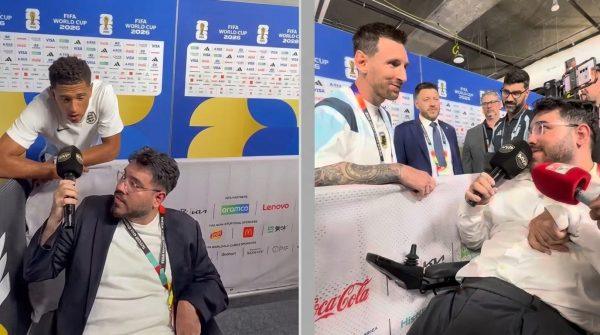
On June 9, 2026, Gutiérrez found himself face-to-face with Lionel Messi. The Argentine captain, amid the chaos of the tournament, paused when he noticed the journalist in his wheelchair. Gutiérrez asked about Messi's motivation entering his sixth World Cup and about individual records. The exchange was brief but electric. Within hours, a clip of the interview racked up millions of views across social media, showcasing the power of a reporter who refuses to be overlooked.
“His human warmth surpassed any expectation I had,” Gutiérrez later said of Messi. The moment wasn't just a career highlight—it was a reminder that physical presence at major events matters. Authentic, candid interactions happen in person, not through screens. For a journalist who had navigated logistical hurdles to get there, the payoff was immense.
Building a Voice in a Crowded Field
Gutiérrez's rise wasn't handed to him. After leaving Venezuela, he faced economic and logistical obstacles that would have stopped many. But he transformed his independent outlet into a respected digital platform, attracting an audience that values authenticity over corporate polish. In a media landscape dominated by giants, he carved out space for a Venezuelan perspective—one that highlights the human stories behind the scores.
His work at the World Cup also pushed for better accessibility. Gutiérrez actively campaigned for improved working conditions for journalists with mobility needs, eventually securing a special pass that allowed his father to assist him in the stadiums. Event organizers took note, reevaluating entry and exit protocols in mixed zones after witnessing his determination. This advocacy turned his personal experience into a blueprint for inclusion at international events.
“My condition gave me a sharper eye for reality,” Gutiérrez has said. He captures environmental details that enrich his reporting—the tension in a training camp, the quiet moments before a match—offering a deeper interpretation of modern sports. For young Latinos, especially those with disabilities, his story is a powerful example: vocation, fueled by strategy, opens doors that seem closed.
In a sport where narratives often revolve around superstars, Gutiérrez reminds us that the people telling those stories matter too. His journey from Punto Fijo to the World Cup pitch is a win for Venezuelan journalism, for inclusion, and for anyone who believes that hard work can rewrite the rules.