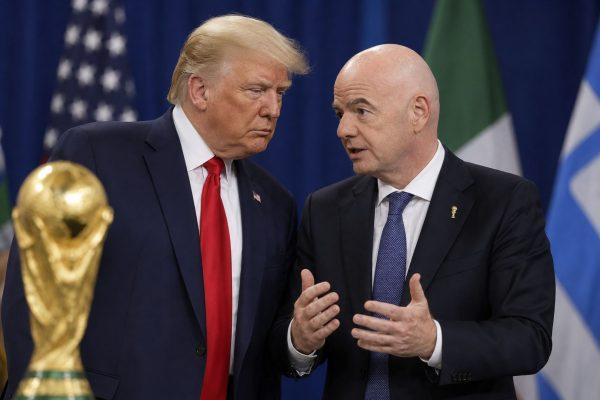
In a move that has sent shockwaves through the 2026 World Cup, FIFA has overturned the automatic one-match suspension handed to United States striker Folarin Balogun. The 25-year-old Monaco forward, who leads the USMNT with three goals in group play, will now be available for Monday's elimination match against Belgium in Seattle. The decision came after a direct telephone call between U.S. President Donald Trump and FIFA President Gianni Infantino, according to sources familiar with the matter.
A controversial intervention
Balogun received a straight red card on Wednesday for a dangerous challenge on Bosnian defender Tarik Muharemović, catching him high on the ankle. The automatic suspension would have kept him out of the crucial knockout fixture. But on Sunday, FIFA's disciplinary committee announced it was suspending the penalty under Article 27 of the FIFA Disciplinary Code, which allows the organization's high-level judicial bodies to delay enforcement of a sanction by placing the player on a conditional probationary period. In Balogun's case, the suspension is deferred for 12 months; any similar infraction during that time will trigger the original ban.
The Royal Belgian Football Association (RBFA) immediately issued a formal protest, calling the intervention an existential threat to the integrity of the tournament. Belgian manager Rudi Garcia, speaking through a translator, condemned the decision as a blow to the ethical foundations of the World Cup. "This sets a damaging precedent," he said. "If the rules can be bent for one player, what stops them from being bent for others?"
Historical context adds weight to the criticism. A mid-tournament red card reversal has not occurred since the 1962 World Cup in Chile, when Brazilian legend Garrincha was controversially allowed to play in the final after being sent off against the host nation in the semifinal. That decision, too, sparked outrage and remains a footnote in World Cup lore.
Political pressure and team dynamics
President Trump took to social media after the ruling, thanking FIFA for correcting what he called a "severe sporting injustice." The call to Infantino, placed immediately after Wednesday's match, reportedly requested an expedited review of the field decision. For a host nation already navigating the complexities of the tournament, the move has been framed as a necessary correction rather than a favor.
Inside the US camp, head coach Mauricio Pochettino defended the outcome, arguing that the team had already paid a price by playing with ten men for over 30 minutes in the previous round. "We absorbed an unfair tax," Pochettino said. "Having Folarin back stabilizes our attack and gives us a real chance against a top European side." The USMNT is aiming for its first quarterfinal appearance since 2002, and Balogun's presence is seen as critical to that goal.
The controversy also highlights the broader tensions surrounding the World Cup in the United States. For many Latino fans, the tournament is a celebration of shared heritage and passion for the game, but it also raises questions about fairness and the influence of political power. As we've reported in our coverage of ICE presence at the World Cup, the intersection of politics and sport is never far from the surface.
Balogun's return reshapes the tactical landscape for Monday's match. The USMNT will face a Belgian side ranked among Europe's elite, and the forward's ability to stretch defenses and finish chances could be the difference. For a deeper look at how the US attack is evolving, check out our analysis of the striker battle between Balogun, Pepi, and Wright.
As the debate over FIFA's decision continues, one thing is clear: the 2026 World Cup is already delivering drama that goes far beyond the pitch. Whether this sets a dangerous precedent or simply reflects the realities of a tournament hosted by a global superpower, the eyes of the soccer world will be on Seattle on Monday.