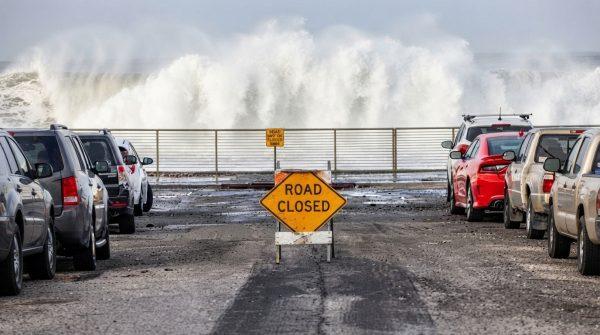
As El Niño strengthens across the Pacific, California's coastal communities are bracing for another season of extreme storms and flooding. From San Diego to Long Beach, emergency crews are deploying sandbags, concrete barriers, and rock revetments to shield homes and infrastructure from surging waves. But these urgent measures come with a hidden price: they accelerate beach erosion and threaten the very shorelines residents cherish.
Emergency Defenses, Lasting Consequences
In Dana Point, property owners along Beach Road are racing to install new rock revetments after the California Coastal Commission approved 24 emergency permits in September. The Federal Emergency Management Agency classifies all 201 parcels on Beach Road as high-risk flood zones, and aging wooden seawalls are failing under intense wave action. Homeowners face mounting insurance pressures and are investing heavily in immediate structural reinforcement.
However, environmental groups warn that these hard structures disrupt natural sediment flow. "Rigid seawalls protect private property at the direct expense of narrowing public beaches," says Chad Nelsen, executive director of the Surfrider Foundation. The result is a classic coastal fix catch: defending homes today means losing sandy shores tomorrow.
Geologist Jonathan Warrick of the U.S. Geological Survey explains that Capistrano Beach already suffers from long-standing sand scarcity. Without increased sediment supply, beaches remain vulnerable, and shoreline hardening creates a double-edged sword that compromises public access.
Infrastructure at Risk: Rail Lines and Highways
The vital railway corridor connecting Orange and San Diego counties carries $1 billion in cargo annually. Since 2021, cliff movements and storms have caused nearly a year of service disruptions, despite a major rock reinforcement project completed in 2025 that still experiences sediment spillage onto the tracks. The Orange County Transportation Authority has secured over $300 million in state, federal, and local funding to protect the tracks for the next three decades.
Orange County supervisor Katrina Foley acknowledges the trade-off: "Rock barriers accelerate beach erosion, but emergency preservation is strictly necessary." Regional transit agencies prioritize uninterrupted freight movement, even as they evaluate longer-term solutions.
Local officials are also launching sediment relocation projects, moving 200,000 cubic yards of sand from the Santa Ana River mouth to Newport Beach to combat shoreline degradation and protect historical structures. Heavy machinery dredges coastal shipping channels to keep them navigable.
Natural Resilience and Community Action
In Long Beach, municipal workers construct emergency sand berms to contain rising waters, though powerful waves have breached coastal walls and damaged residential properties on the peninsula. A 1940s-era breakwater has pushed sand westward, leaving some areas more exposed.
But there is growing momentum for nature-based solutions. Successful projects like the one at Surfers Point in Ventura have shown that relocating vulnerable infrastructure inland, placing protective stones at river mouths, and restoring coastal dunes can capture drifting sand organically. Environmental advocates are pushing for sustainable shoreline management that works with natural processes rather than against them.
As El Niño brings southern fish to northern California waters, the state's coastal communities are reminded of the ocean's power. The challenge is to protect people and property without sacrificing the beaches that define California's identity.
Regional planners are evaluating comprehensive resilience frameworks to modernize aging drainage systems. State legislators have approved budgets for subterranean water retention basins capable of capturing millions of gallons of runoff. Structural engineers are testing innovative permeable pavement materials across municipal parking lots.
The California Coastal Commission is considering medium- and long-term alternatives for Beach Road properties, including cobblestone berms, house elevation, and sand replenishment. Conservation advocates emphasize the need to preserve public beach access for future generations.
As the state grapples with these complex trade-offs, one thing is clear: the decisions made today will shape the coastline for decades. For Latino communities along the coast, many of whom rely on beaches for recreation and cultural gatherings, the stakes are personal. The fight against El Niño is not just about infrastructure—it's about preserving a way of life.