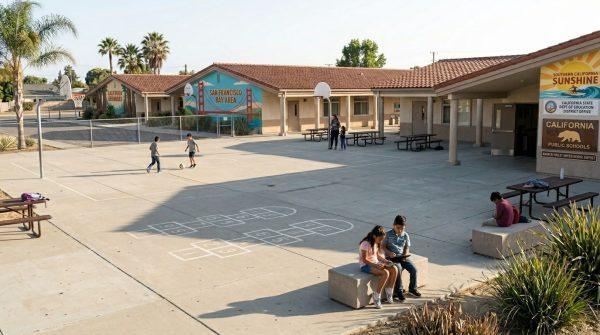
California's public schools are undergoing a seismic shift. By June 2026, hundreds of districts across the state will report fewer students in their classrooms, a trend that has been building for years. The numbers are stark: a cumulative loss of 420,000 K-12 students over the last decade, according to the Public Policy Institute of California. This isn't a temporary dip—it's a structural change driven by two forces: historically low birth rates since 2007 and the steady exodus of young families from pricey urban hubs like San Francisco and Oakland to more affordable regions.
For Latino families, this crisis hits close to home. Many who once settled in California's cities for work and community are now being priced out, forced to relocate to the Central Valley, the Inland Empire, or even out of state. As the cost of living in California continues to climb, the dream of stability slips further away. The result? Empty desks in elementary schools that once buzzed with the voices of children from México, Guatemala, and El Salvador.
The Domino Effect of Declining Enrollment
The enrollment drop works like a chain reaction. Fewer births five years ago mean fewer kindergarteners today. Those empty seats then ripple upward, reducing middle and high school rolls in subsequent years. Schools that once expanded now face a brutal choice: consolidate or close. In districts like Los Angeles Unified, administrators are merging campuses, laying off teachers, and freezing hiring. William Chavez, an educator in LA, puts it bluntly: "Austerity measures only deepen the damage. If we're going to close schools, we need to pair that with real investment in technology and tutoring to protect the quality of what remains."
The financial strain is acute because California funds schools based on daily attendance. Fewer students mean less money, creating a vicious cycle where districts cut programs, which then drives more families to seek alternatives like charter schools or private education. This is especially painful in Latino-majority neighborhoods, where public schools often serve as community anchors. Scams targeting Latino families add another layer of stress, as parents already stretched thin must navigate a system in flux.
Urban Flight and the Affordability Crisis
The affordability crisis in cities like San Francisco and Oakland is accelerating the exodus. Young families—many of them Latino—are leaving metropolitan centers in search of housing they can actually afford. This internal migration reshapes the distribution of educational funds, concentrating budget pressure on the districts losing the most students. Meanwhile, the state's proposed 2026-27 budget anticipates reduced education funding, leaving administrators scrambling to balance books while maintaining basic services.
Community organizations are demanding transparency in school closures, warning that minority groups often bear the brunt. "When a school closes in a Latino neighborhood, it's not just a building that disappears," says María Hernández, an advocate with the California Latino School Board Association. "It's a loss of trust, of cultural connection, of a safe space for our kids." The challenge is to ensure that consolidation doesn't become a euphemism for disinvestment.
Looking Ahead: A Smaller, Smarter System
The demographic horizon offers little relief. Projections show a 13 percent decline in high school graduates by 2041, which will eventually hit colleges and universities. Institutions like Sonoma State and other regional campuses are already exploring mergers and shared services. The question is whether California can transform its aging school infrastructure into something more agile—smaller classes, personalized tutoring, and technology-driven learning that adapts to fewer students.
Experts at the Public Policy Institute of California argue that intelligent consolidation is the only viable path. That means closing under-enrolled schools but reinvesting savings into programs that work: bilingual education, college prep for Latino students, and mental health support. It also means rethinking how we measure success—not by the number of buildings, but by the quality of learning in every classroom that remains.
For Latino families, the stakes couldn't be higher. Education has long been the ladder to opportunity, but that ladder is wobbling. As California navigates this demographic transition, the state must ensure that the schools serving its fastest-growing community don't get left behind. The solution won't be easy, but it starts with honest conversations about resources, equity, and the kind of future we want to build—one classroom at a time.