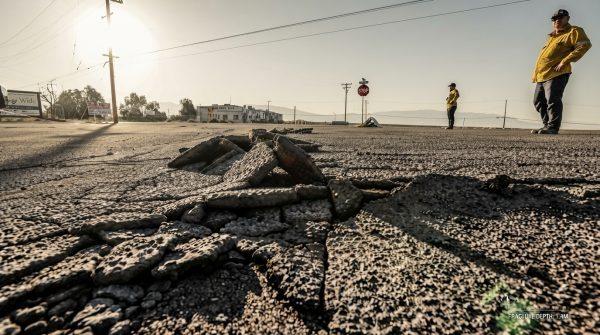
For millions of Californians, the ground beneath their feet is a source of both beauty and unease. Recent findings from a study published in the Journal of Geophysical Research: Solid Earth have intensified that unease, revealing that key sections of the San Andreas and San Jacinto faults are under stress levels not seen in centuries. The research, released on June 3, 2026, reconstructs a millennium of seismic activity using sediment dating and geological records, offering a sobering look at the forces shaping the region.
The study zeroes in on densely populated areas—Los Angeles, San Bernardino, Riverside, and the Coachella Valley—where the crust is showing pressures close to historical maximums. Ahmed Elbanna, a researcher involved in the work, warns that the region is facing critical pressure levels along its primary fault lines. While the exact timing of a major quake remains impossible to predict, the data suggests that the potential for a significant event is higher than previously understood.
A perfect storm at Cajon Pass
One of the most concerning findings is the situation at Cajon Pass, a crucial corridor where the San Andreas and San Jacinto faults converge. The study indicates that the simultaneous buildup of tension in this area could trigger a rupture that affects both fault systems at once. Such a scenario would be catastrophic, disrupting not only the local communities but also the vital infrastructure that runs through the pass—interstate highways, railway lines, gas pipelines, and power grids. The vulnerability of these systems is a major concern for emergency planners, who recognize that a joint rupture could cut off essential supplies to millions.
This isn't just theoretical. Historical simulations by the United States Geological Survey (USGS) have shown that a major earthquake in this region would cause economic and human losses surpassing any previous record. Early warning systems, while valuable, only provide a few precious seconds of alert once the initial seismic waves are detected. For residents in the affected areas, the message is clear: preparedness is not a luxury but a necessity.
The findings also echo a broader understanding of how distant earthquakes can stress the San Andreas Fault, a phenomenon that researchers have been studying for years. The interconnectedness of fault systems means that seismic activity in one area can influence stress levels elsewhere, adding another layer of complexity to forecasting efforts.
Preparing for the inevitable
In light of these findings, the Statewide California Earthquake Center emphasizes that while an exact date for the next big one remains elusive, civil preparedness and the strengthening of critical infrastructure are the only effective tools to mitigate human and economic impact. This sentiment is echoed by disaster management experts who are calling for an exhaustive review of building codes in metropolitan areas and prioritizing the structural reinforcement of aqueducts and strategic road networks.
For Latino communities across Southern California, these concerns are not abstract. Many families have deep roots in the region, and the resilience of these communities is often tested by natural disasters. As the state continues to grapple with the reality of living on unstable ground, the focus must remain on proactive measures. Community preparedness, as researchers note, must be constant and not dependent on specific calendar forecasts. Early evacuation protocols are being refined through automated mobile technologies, but the human element—knowing your neighbors, having a plan, and staying informed—remains irreplaceable.
The geological record, analyzed through tree rings and historical sediments, validates the need to anticipate multiple rupture scenarios. Government agencies are allocating significant resources to update response plans for massive emergencies, but the ultimate responsibility also lies with individuals and communities. As seismological projections indicate that underground energy accumulation will continue to demand maximum technical vigilance for decades, the spirit of proactive community resilience offers a glimmer of hope. Western cities, from San Diego to Sacramento, are maintaining a firm institutional commitment to public safety, even as the earth beneath them remains restless.
For those living in the shadow of these faults, the message is not one of fear but of action. Understanding the risks, supporting scientific research, and investing in preparedness are the best ways to honor the past and protect the future. As the study makes clear, the ground may shift, but so can our resolve.