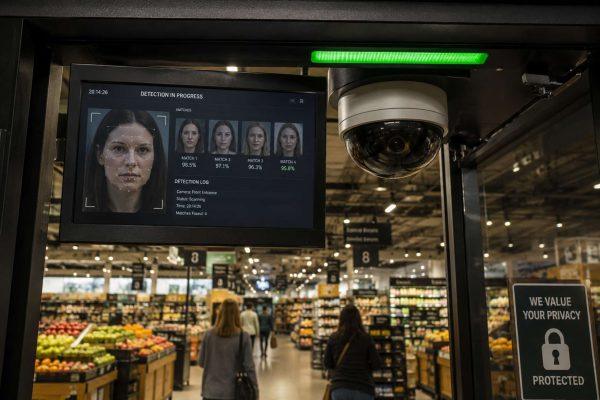
Walking into a grocery store in California used to mean grabbing a cart and checking your list. Now, in some Bay Area locations, it also means having your face scanned before you even reach the produce aisle. Grocery Outlet and other regional chains have quietly rolled out AI-powered facial recognition systems designed to identify people previously involved in theft or disruptive behavior.
The technology, which uses software like SAFR Guard, captures high-resolution images of every shopper's face as they enter or check out. Those images are instantly compared against proprietary databases of flagged individuals. If there's a match, store managers and loss prevention staff get an alert, allowing them to monitor the person in real time. The company behind the software says that for the vast majority of shoppers—those who don't match any record—the scans are deleted immediately, so no permanent record is kept.
Privacy concerns and the limits of consent
But privacy advocates aren't convinced. The ACLU and other consumer rights groups have pointed out that while stores post warning signs at entrances—as required by the California Consumer Privacy Act (CCPA)—shoppers have no real way to opt out. If you want to buy groceries, you have to submit to the scan. That's a far cry from the kind of informed consent that privacy laws are supposed to guarantee.
There's also the risk of misidentification. Facial recognition systems have a documented history of errors, particularly for people with darker skin tones. A false match could mean being followed around the store or even confronted by security for a crime you didn't commit. The Federal Trade Commission has already penalized retailers for using undisclosed biometric tracking, and California's own privacy laws are still evolving to keep pace with the technology.
For many Latino shoppers, who make up a significant portion of California's grocery customer base, this feels like another layer of surveillance in daily life. It's not just about the inconvenience of being watched—it's about the broader implications for communities that have historically been over-policed. As California's new AI transparency law begins to reshape how companies disclose their use of artificial intelligence, questions about biometric data collection are becoming harder to ignore.
The tension here is real: retailers say they're just trying to protect their staff and their inventory. Shoplifting costs the industry billions each year, and stores have a right to take reasonable precautions. But at what point does loss prevention cross the line into invasive surveillance? The answer may depend on how state regulators and courts interpret existing privacy laws in the coming months.
Some shoppers, like María González, a regular at a Grocery Outlet in Oakland, say they didn't even notice the cameras until a friend pointed them out. "I come here every week with my kids," she told us. "I don't want my face in some database just because I bought milk and tortillas." Her reaction echoes a broader unease that's spreading beyond privacy advocates to everyday consumers.
Meanwhile, the technology keeps advancing. Newer systems can track not just faces but also body language and movement patterns, raising the stakes even higher. As California's summer COVID wave reminds us, public health and safety measures can sometimes have unintended consequences for civil liberties. The same could be said for retail security.
For now, the cameras are here to stay, at least in the stores that have installed them. But the debate is far from over. Lawmakers in Sacramento are already considering stricter rules on biometric data, and consumer groups are pushing for a statewide ban on facial recognition in retail spaces. Until then, shoppers in California will have to decide whether the convenience of grabbing groceries is worth the price of being watched.
As California's minimum wage rises and the cost of living climbs, the last thing families need is to feel like suspects when they're just trying to feed their households. The grocery store should be a place of trust, not surveillance. But in the age of AI, that trust is becoming harder to find.