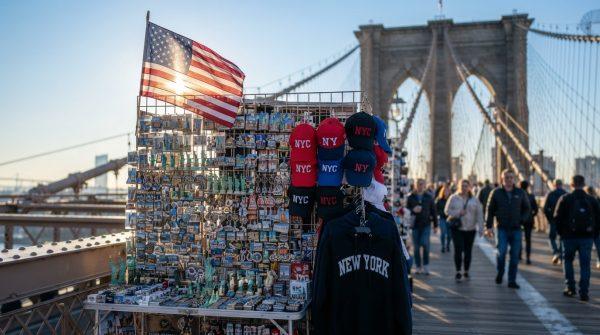
New York's Brooklyn Bridge, a beloved symbol of the city's grit and grace, has turned into an open-air market where unlicensed vendors now outnumber the legal ones. On any given day, dozens of sellers hawk souvenirs, caps, and fruit cups along the 1.83-kilometer span, squeezing pedestrians and cyclists into a narrow, chaotic passage. For the licensed vendors—many of them disabled veterans who fought for their spots—the situation has become untenable.
Sammy, a 48-year-old ice cream vendor and veteran who has worked near City Hall for decades, says the problem exploded in late 2025. "They come back in force, and there's nothing we can do," he told Latino World News. "We pay for our licenses, we follow the rules, and yet we're the ones losing business." His frustration echoes through the community of authorized merchants who see their livelihoods slipping away as unlicensed sellers camp out from dawn to claim the best corners.
A walkway under siege
The bridge's pedestrian promenade, once a place for tourists to snap photos of the Manhattan skyline, now resembles a bustling mercado. An 11-year-old girl was spotted selling bottled water in the main corridors, telling reporters her mother operated there too—a detail that ignited a firestorm over policing and municipal oversight. Community organizations estimate that on busy weekends, the number of unauthorized stalls exceeds 100, far outpacing the legal vendors who have fought for years to secure their permits.
The city's response has been tepid at best. Fines for unlicensed vending start at just $20, a pittance compared to the daily earnings these sellers can pull in from the steady stream of tourists. The NYPD's enforcement efforts have been sporadic, and confiscations are rare. In January 2024, the city passed regulations explicitly banning vending on pedestrian walkways, but the rules have done little to deter the influx.
For disabled veterans, the stakes are personal. Many rely on their vending income to supplement disability benefits, and they argue that the city's passivity devalues their licenses. "We served our country, and now we can't even earn a living because the city won't enforce its own laws," said one veteran who asked to remain anonymous. The veterans' associations have called for strict, equal enforcement, but so far, their pleas have fallen on deaf ears.
The chaos isn't just economic—it's physical. Vendors jostle for space, and territorial disputes have escalated into shoving matches and even fights, endangering the very pedestrians the bridge is meant to serve. "It's a safety hazard," said a spokesperson for a local community board. "People can't move, and when there's an emergency, it's going to be a nightmare."
Some vendors have turned to technology to navigate the chaos. A new app launched by street vendor advocates helps legal sellers find safe spots and avoid fines, but it does little to address the root problem. Meanwhile, the city's broader crackdown on illegal e-bike and scooter sales shows that enforcement is possible when the will exists—but on the Brooklyn Bridge, that will seems absent.
The political divide over public space management has deepened. Some residents defend informal commerce as a lifeline for immigrant families, while others demand that the city reclaim the bridge for pedestrians and legal businesses. "This isn't about being anti-vendor," said one local activist. "It's about fairness. If you follow the rules, you should be able to make a living."
As the summer tourist season approaches, the situation is likely to worsen. The bridge's iconic status makes it a magnet for visitors, and without intervention, the unlicensed vendors will only multiply. The city faces a choice: enforce the law and protect licensed workers, or let the chaos continue to erode the experience of one of New York's most treasured landmarks.
For now, the suspended corridors over the East River remain a battleground—not just for space, but for the very idea of order and fairness in a city that prides itself on opportunity. The outcome of this municipal crisis will set a precedent for how New York handles public space in the years to come.