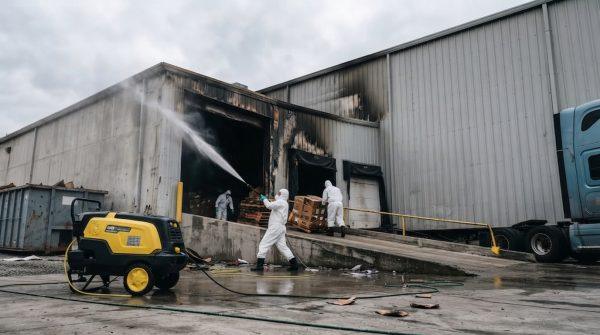
For more than sixty days, the air in Boyle Heights carried a stench that no one should have to endure. A fire at a refrigerated warehouse had left millions of pounds of meat and seafood to rot, and the neighborhood paid the price. Residents reported swarms of pests and a smell so thick it seeped into homes, schools, and small businesses. It was a public health nightmare in one of Los Angeles' most historic Latino communities.
The warehouse, operated by Lineage Logistics, caught fire earlier this year, and the aftermath turned into an environmental crisis. With refrigeration down, the contents began to decompose, creating a massive rotting mass that released toxic gases and attracted vermin. The South Coast Air Quality Management District logged over 4,900 complaints from residents who described headaches, nausea, and a constant, sickening odor.
Cleanup crews have now removed millions of pounds of spoiled food from the site, but the work is not finished. Inspectors say pressure washing and disinfection will continue for at least another week. The company has brought in hundreds of workers daily and says it is investing over $100 million to fully decontaminate the area. Still, for many in Boyle Heights, the damage has already been done.
A community pushed to its limit
Councilwoman Ysabel Jurado, who represents the district, has been sharply critical of Lineage Logistics. She told local media that the company failed to meet deadlines and that the community suffered severe health impacts because of the delays. "This is not just about a bad smell," she said. "This is about a corporation that put profit over people and left a working-class Latino neighborhood to breathe toxic air for months."
Residents describe a daily grind of closed windows, air purifiers running nonstop, and children unable to play outside. Local businesses saw customers stay away, and some families say they considered leaving their homes. The psychological toll has been as heavy as the physical one.
Three community organizations have now filed a formal notice of intent to sue Lineage Logistics in federal court. They argue the company deliberately withheld information about hazardous substances released during the fire and the subsequent decay. The lawsuit seeks damages for the harm inflicted on residents and demands stricter oversight of industrial facilities in residential areas.
Lineage Logistics, for its part, defends its response. A company spokesperson said they have mobilized hundreds of workers and are committed to completing the cleanup. They also noted that they are cooperating with regulators and have invested heavily in mitigation equipment, including negative air pressure systems to contain odors.
But for Boyle Heights, the scars run deep. This is a neighborhood that has long fought environmental injustice, from freeway expansions to industrial pollution. The warehouse fire is just the latest chapter in a history of communities of color bearing the brunt of negligent corporate practices.
Local universities are now studying the incident as a case study in urban environmental management. Students are analyzing what went wrong and how regulatory agencies can better protect vulnerable communities. Meanwhile, public health centers are monitoring residents for potential infectious outbreaks linked to the prolonged exposure to decomposing organic matter.
The city is also investigating the company's handling of hazardous waste and has demanded detailed reports on chemical emissions. The South Coast Air Quality Management District has imposed strict conditions on the cleanup, requiring daily monitoring and reporting until the site is declared safe.
For now, the smell is finally starting to fade. But the fight for accountability is just beginning. Residents are organizing, demanding transparency, and pushing for reforms that would prevent a similar disaster elsewhere. As one community leader put it, "We are not just cleaning up a warehouse. We are cleaning up a system that failed us."
Boyle Heights has always been a place of resilience, but resilience should not be a requirement for basic health and safety. The hope is that this crisis becomes a turning point, not just for this neighborhood, but for all of Los Angeles. As the city looks toward the future, including plans for electric air taxis and other innovations, it must not forget the communities that bear the weight of its industrial past.
For those who lived through the months of stench and pests, the memory will not fade easily. But neither will their determination to see justice done.