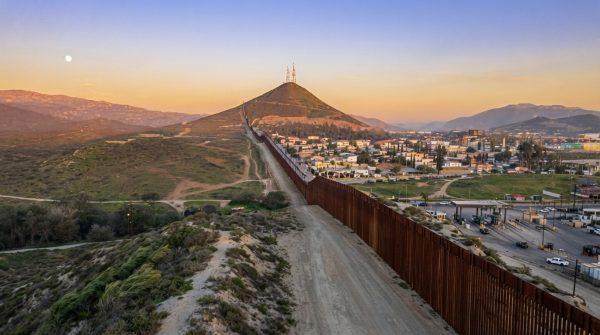
In the rolling hills east of San Diego, the rumble of dynamite has become a daily disturbance for residents near Tecate. The sound isn't from mining or quarrying—it's the U.S. government expanding the border wall through land that the Kumeyaay people have held sacred for centuries. For the local communities on both sides of the line, the blasts are more than noise; they're a sign of deep disrespect and a looming environmental threat.
The construction, overseen by the Department of Homeland Security and carried out by Customs and Border Protection, involves 30-foot steel barriers, patrol roads, and advanced surveillance tech. But the real damage, according to cultural preservation groups, is happening to the mountain known as Kuchamaa—or Tecate Peak—a site listed on the National Register of Historic Places since 1992. The mountain is not just a landmark; it's a spiritual anchor for the Kumeyaay, whose ancestral territory spans the U.S.-Mexico border.
Sacred ground under siege
Kuchamaa's significance is recognized federally, yet the current project has been granted exemptions that bypass environmental and cultural protections. That's why community leaders are sounding the alarm. They say the heavy machinery and blasting are tearing apart the mountain's slopes, triggering erosion and rockfalls that threaten not only the landscape but also the safety of people living on the Mexican side of the border, where over 26,000 residents are concentrated in urban areas near Tecate.
“This is not just about a wall. It's about destroying a place that has been a source of identity and spirituality for generations,” said a spokesperson for a local indigenous rights group. The Kumeyaay see Kuchamaa as a living entity, and the construction is seen as a violation of international agreements that protect cultural heritage.
The project aims to add about 9.74 miles of new barriers in San Diego County, split between sections west and east of the Tecate port of entry. The design includes reinforced metal bollards, night lighting, fiber optics, and access roads—all intended to enhance Border Patrol's control over rugged terrain. But for many, the cost is too high.
Environmental experts warn that the removal of vegetation and the cutting into bedrock are accelerating soil erosion and fragmenting wildlife corridors. The long-term ecological damage could be irreversible, they say, affecting not just the immediate area but the broader region's balance.
Residents have been documenting the changes with photos and videos, showing scars on the mountain that were not there before. They've also reported constant rockfalls, which they fear could turn into landslides during heavy rains. Risk management specialists agree, noting that the destabilized slopes are more vulnerable to mudslides, putting communities on both sides of the border in harm's way.
In response, local organizations are stepping up. Groups like Latinos in Heritage Conservation have added this conflict to their list of national preservation priorities. They're gathering evidence and testimonies to push for federal intervention. Meanwhile, neighborhood committees in Tecate are organizing meetings to coordinate legal actions, and digital platforms are circulating bilingual press releases to raise awareness.
The pushback is not just about stopping construction; it's about demanding a seat at the table. Community leaders are asking for transparent dialogue with federal authorities to assess the geological risks and to find a way to honor both security needs and cultural heritage. They point out that the border region has long been a place of coexistence and brotherhood between neighboring communities, and that the wall threatens to sever those ties.
As the debate continues, the sound of dynamite echoes through the valleys, a stark reminder that the fight over this land is far from over. For the Kumeyaay and their allies, the stakes are nothing less than the soul of a sacred mountain.