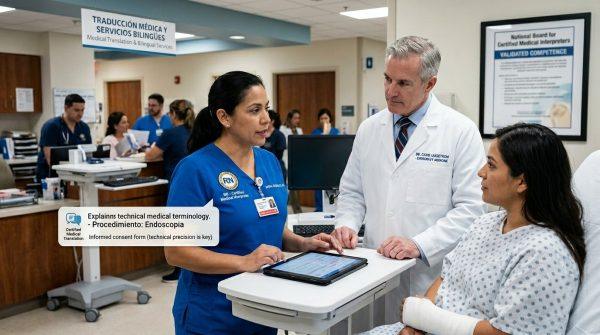
For Latino healthcare professionals across the United States, speaking Spanish is no longer just a cultural asset—it's a financial one. In states like California, Texas, Florida, New York, and New Jersey, hospitals and clinics are offering annual salary increases of up to $20,000 for workers who can communicate fluently with Spanish-speaking patients. This isn't a fringe benefit; it's a growing standard in the medical field.
According to data from the Bureau of Labor Statistics, bilingual employees in healthcare earn between $5,000 and $20,000 extra each year. The reason is straightforward: as the Latino population grows, so does the need for precise, culturally competent care. Medical errors drop significantly when patients and providers speak the same language, and institutions like The Joint Commission have made clear that effective communication is a patient safety priority.
Which Roles Benefit Most?
The bilingual bonus isn't limited to doctors or nurses. Medical interpreters often earn over $30 per hour, while registered nurses can receive an additional $5,000 annually. Social workers and patient navigators—especially those working in oncology or mental health—see compensation packages that are 10% higher than their monolingual peers. Even administrative staff in reception or admissions can earn an extra $1 to $3 per hour simply by being bilingual.
But not all employers play fair. Some small clinics use bilingual staff as informal interpreters without offering extra pay or formal training. This practice not only increases workload but also raises the risk of diagnostic errors. Professionals should demand clear job descriptions and compensation that reflect their language skills, backed by market data and certifications.
How to Secure the Bonus
Getting certified is the first step. Organizations like the National Board of Certification for Medical Interpreters offer credentials that validate technical competence. Hospitals and large health systems often prioritize candidates with these certifications during hiring. It's also wise to research each employer's policies on bilingual pay before accepting a position.
When negotiating, come prepared with data. Mention the volume of Spanish-speaking patients you'll serve and how your skills reduce communication gaps. Be explicit about the salary differential you expect. In many cases, simply asking for the bonus—and showing you know the market rate—can lead to a raise.
Spanish is increasingly seen as a professional credential in healthcare, not just a personal skill. Workers who treat it as such—by getting certified, researching employers, and negotiating—are turning their language ability into a career accelerator. As demand for Spanish-speaking healthcare workers continues to rise over the next decade, those who act now will be best positioned to benefit.
For more on how language skills can open doors, check out our guide on Navigating Latin American Spanish: Regional Words That Prevent Misunderstandings. And if you're in New Jersey, you might also be interested in how the state is giving away 770 free World Cup tickets to families, healthcare workers, and small business supporters.