For years, the assumption has been that California's worst traffic belongs to Los Angeles. But a new survey flips that script, pointing to a Bay Area interchange as the state's most dreaded stretch of asphalt.
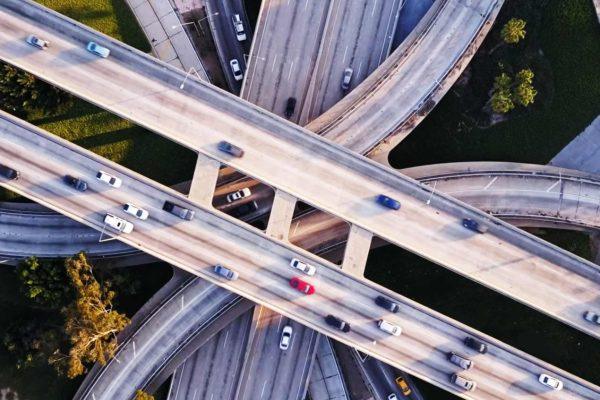
The MacArthur Maze—the tangled web of freeways connecting I-80, I-580, and I-880 near the Bay Bridge—has been ranked as California's worst commute, according to data from Resume.io reported by the Mercury News. The survey of more than 3,000 employees found that drivers using this westbound connection would be willing to give up $3,220 of their annual salary just to avoid it. That figure represents the value they place on reclaiming personal time, not counting savings on gas or car maintenance.
The cost of congestion
This isn't just about lost minutes. The stress of daily gridlock is pushing workers to rethink their jobs and their mental health. The survey highlights how much Californians are willing to pay—literally—for a smoother ride.
While the Maze took the top spot, Southern California's highways are close behind. The US 101/Hollywood Freeway in Los Angeles ranks second, with drivers willing to sacrifice $3,112 a year. The I-405 through the Sepulveda Pass comes in third, with a similar price tag of over $3,000.
But Los Angeles still holds the national crown for overall traffic misery. A separate report from Consumer Affairs found that LA drivers spend an average of 8 hours and 27 minutes stuck in traffic each week—more than a full workday. That's up 36 minutes from last year. San Francisco ranks fourth nationally, with nearly 6 hours of weekly delays.
For many in the Latino community, these numbers hit close to home. Whether it's commuting from the San Fernando Valley to jobs in downtown LA or navigating the East Bay to reach service-industry shifts, the daily grind is a shared experience. The recent honor for Los Ángeles Azules in LA is a reminder of how deeply intertwined our lives are with these streets—even when they're bumper-to-bumper.
The survey also underscores a broader issue: the toll that traffic takes on family time and community life. When you're spending over eight hours a week in a car, something has to give. That's why some are looking at new housing policies that could shorten commutes by making it more affordable to live closer to work.
For those who can, the escape hatch might be remote work or relocating entirely. But for many, the commute is a non-negotiable part of life. As one driver put it, "Just add one more lane, dude"—a sentiment that sums up the frustration of a state that can't seem to build its way out of traffic.
Still, the data offers a silver lining: it quantifies what we all feel. It gives a dollar figure to the time we lose, and that can be a powerful tool for change. Whether it's pushing for better public transit or supporting policies that ease the burden on working families, there are ways to fight back against the gridlock.
For now, the MacArthur Maze stands as a symbol of California's traffic paradox: the state that dreams big also jams big. And for those of us who call it home, the commute is just part of the deal.