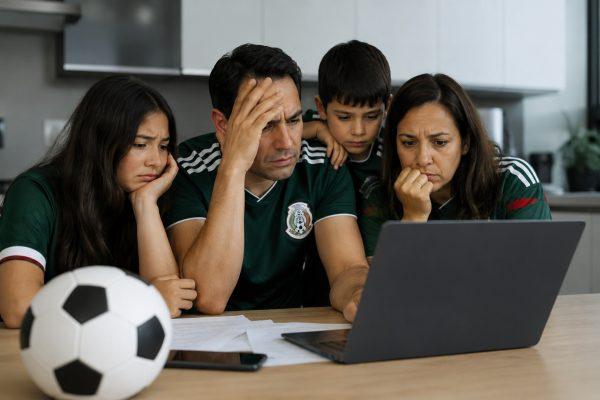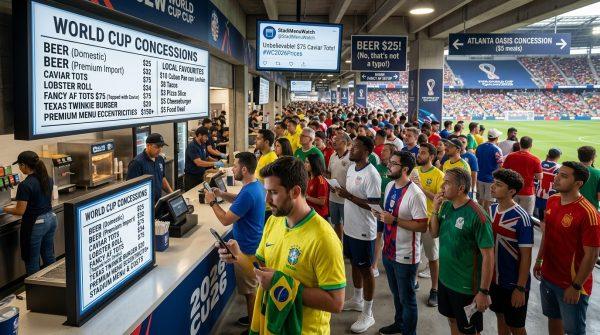
If you're planning to attend the 2026 World Cup across the United States, Mexico, and Canada, get ready for a culinary shock. Stadium food prices are making headlines for all the wrong reasons: a $25 beer in Mexico City, $75 caviar-topped tater tots in Miami, and $20 Texas Twinkie burgers in Arlington. For many Latino fans traveling from countries where a full meal costs less than a single stadium beer, the sticker shock is real.
But here's the thing: you don't have to empty your wallet to enjoy the tournament. With a little planning and local know-how, you can eat like a champion without the financial hangover. Let's break down the costs, the cultural contrasts, and the smart strategies that will keep your stomach full and your budget intact.
The Price of Fútbol: What You'll Pay at the Stadium
The 2026 World Cup spans 16 stadiums across three countries, and each venue has its own menu and pricing. In Miami, the Hard Rock Stadium is offering the infamous $75 Fancy AF Tots topped with caviar—a far cry from the $15 traditional stadium food most fans expect. Meanwhile, at AT&T Stadium in Arlington, a $20 Texas Twinkie burger (a deep-fried jalapeño popper burger) has drawn criticism from fans who feel the prices are out of touch with everyday reality. As we reported in Fans Blast $20 Quesadillas at AT&T Stadium During 2026 World Cup, the backlash has been swift.
In Mexico City, the Estadio Azteca is charging $18 for a beer, while Kansas City's Arrowhead Stadium offers $34 lobster rolls. Even basic items like hot dogs and sodas can run $10–$15. For a family of four, a single stadium meal can easily top $100—before you even factor in souvenirs or transportation.
But not all venues are gouging fans. Atlanta's Mercedes-Benz Stadium has become a beacon of affordability, offering $3 pizza slices, $5 cheeseburgers, and $2 hot dogs. It's a model that other host cities should study closely, especially as 80% of attendees report adjusting their budgets after seeing the prices.
Cultural Contrasts: Stadium Food vs. Street Food
One of the biggest tensions of the 2026 World Cup is the gap between premium stadium offerings and the vibrant street food culture of host cities. In Guadalajara, you can find $8 traditional tacos from a street vendor that taste better than anything inside the stadium. In Miami, a $10 Cuban pan con lechón from a local cafetería is both authentic and affordable. Yet many fans feel pressured to buy inside the venue, fearing they'll miss out on the full experience.
Experts recommend embracing the local food scene. Not only does it save money, but it also connects you to the culture of each host city. As one culinary commentator put it, "The real World Cup experience isn't a $75 caviar tot—it's sharing a $5 taco with a stranger from another country."
Social media has amplified the debate. Searches for "affordable stadium food" have tripled since the tournament began, and fan forums are buzzing with tips on where to find the best deals. Platforms like Instagram and TikTok are tracking real-time pricing, helping fans avoid the worst rip-offs.
Four Ways to Beat the Budget
Here are practical strategies to keep your food costs under control:
- Seek out budget-friendly venues: Atlanta, Houston, and Guadalajara have stadiums with accessible pricing. Look for $3 pizza slices and $5 burgers.
- Eat local before you enter: Grab a $10 Cuban sandwich in Miami or $8 tacos in Guadalajara before heading to the stadium. You'll save money and eat better.
- Set a spending limit: Decide on a $50–$100 cap for stadium food and stick to it. This prevents impulse buys that can derail your travel budget.
- Monitor social media: Follow fan accounts and hashtags for real-time updates on $5 food deals and hidden gems at each venue.
For a broader look at saving money during the tournament, check out our guide World Cup 2026 on a Budget: Affordable Adventures in Mexico, US, and Canada.
The Bigger Picture: A $5 Billion Economic Reality
The 2026 World Cup is projected to generate $5 billion in economic activity across the three host nations. But for the average fan, that translates into higher prices for everything from hotels to hot dogs. The key is to plan ahead and prioritize experiences over expensive meals.
As the tournament continues, expect more debates about pricing fairness. But for now, the smartest move is to embrace the local food culture, set a budget, and remember that the best memories come from the game itself—not from a $75 plate of caviar tots.