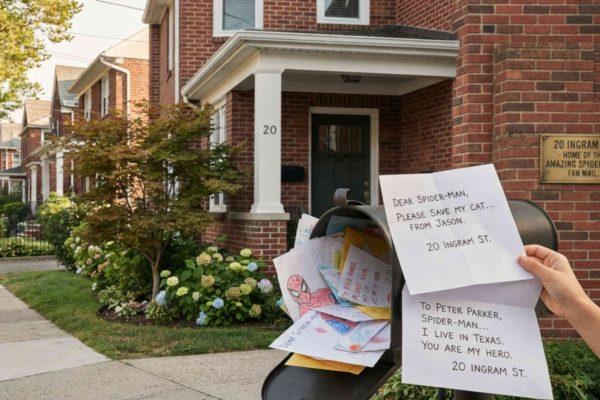
When Jack Shi, a 64-year-old New Yorker, closed on a modest house at 20 Ingram Street in Queens, he thought he was just buying a quiet piece of real estate. He had no idea that Marvel Comics had long ago assigned that exact address to Peter Parker, the friendly neighborhood Spider-Man. Since the discovery, his life has taken a turn straight out of a comic book.
Fans from across the globe now make pilgrimages to the unassuming home. Tourists from Italy, Ireland, and other countries regularly show up to snap photos, and the mailbox overflows with letters and drawings from children addressed to their favorite web-slinger. What could have been a nuisance has become something far more meaningful.
From ordinary purchase to pop culture landmark
Shi, who had no prior connection to the Marvel universe, initially found the attention surreal. But instead of shutting the door on curious visitors, he chose to embrace his unexpected role. “I feel a great responsibility,” he says, noting that Spider-Man represents the best of the American spirit. He kindly agrees when fans ask for a photo outside his door, turning a simple transaction into a shared moment of joy.
The house’s connection to the comics runs deeper than just the address. Longtime neighbors recall that previous tenants actually bore the surname Parker, and one resident’s last name inspired the villainous Green Goblin. These coincidences have only fueled the legend, making the site a true pilgrimage for fans of the saga.
Letters from the next generation
Children’s letters are the most touching part of the phenomenon. They write birthday invitations, ask for advice on saving the world, and share their own superhero dreams. Shi reads each one with care, understanding that for these kids, the line between fiction and reality is beautifully blurred.
Unlike other owners of famous movie homes who have struggled with unwanted attention, Shi has found joy in his unique position. He sees it as a way to keep the magic of Spider-Man alive, especially for the young fans who write to him. “It’s about the illusion,” he says, “and the hope that these kids carry with them.”
The story has also resonated beyond New York, touching Latino communities across the Americas who grew up with Spider-Man as a cultural touchstone. From Bad Bunny's recent contribution to the Spider-Man soundtrack to the character’s universal appeal, the web-slinger bridges cultures. For many Latinos, Spider-Man’s story of resilience and responsibility mirrors their own experiences, making this Queens home a symbol of shared values.
Shi’s approach offers a lesson in grace under pressure. While some might see the constant attention as an invasion, he views it as an opportunity to connect with people from all walks of life. His door is open, literally and figuratively, to anyone who wants to believe in heroes.
As the letters keep arriving and the tourists keep coming, Shi remains grounded. He’s not just a homeowner; he’s a keeper of a small piece of pop culture history. And in a world that often feels divided, his willingness to share that history with others is a reminder of the power of imagination.
For those interested in how other iconic homes have fared, real-life homes behind cinema's most iconic scenes offer a fascinating look at the intersection of fiction and reality. And for fans of the franchise, Tom Holland's risky dehydration trick shows the lengths actors go to for authenticity.
In the end, Jack Shi’s story is not just about a house or a superhero. It’s about the unexpected ways our lives can be touched by the stories we love, and the choice to embrace those moments with kindness. As he puts it, “Spider-Man is more than a character; he’s a symbol of what we can be when we look out for each other.”