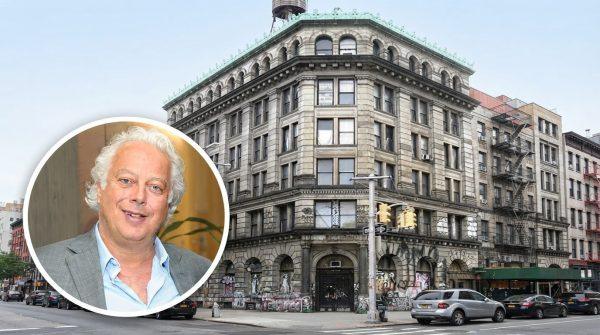
For years, 190 Bowery was a quiet enigma on the corner of Spring Street—a six-story Beaux Arts building that served as the private residence and studio of photographer Jay Maisel. Now, after a decade of meticulous restoration, the property is hitting the open market, and it’s drawing serious attention from investors who understand the value of a piece of New York history that’s been brought into the 21st century.
Developer Aby Rosen, through his firm RFR Holdings, acquired the building in 2015 and has since transformed it from a graffiti-covered mystery into a fully leased commercial asset. The building, originally built as the Germania Bank in 1898, now houses office and retail tenants at full occupancy. The office floors are leased to Industrious, a workplace experience company, at $95 per square foot—a sign of how far the property has come.
A Rare Opportunity in Manhattan Real Estate
What makes this sale stand out is not just the building’s history, but its current performance. With 100% occupancy across all levels, the buyer steps into a property that generates immediate cash flow. The restoration, led by Rosen, modernized internal systems while preserving the iconic facade. That balance between old and new is exactly what attracts tenants and investors alike.
James Nelson of Avison Young is handling the sale, and the timing aligns with RFR’s broader strategy of divesting from select properties to refine its portfolio. For investors looking at Manhattan real estate, this building offers a rare combination of architectural prestige and financial stability.
The location, bordering the Lower East Side, puts it in a neighborhood that has seen intense corporate demand in recent years. The building’s proximity to transit, restaurants, and cultural venues makes it a prime spot for firms that want to be in the heart of downtown Manhattan without the chaos of Midtown.
From Bank to Artist Sanctuary to Corporate Hub
The building’s journey from a bank to a creative sanctuary to a commercial property is a story that mirrors the evolution of the Bowery itself. For decades, it was a place of mystery—covered in graffiti, home to a reclusive artist, and largely off-limits to the public. That changed when RFR stepped in and saw potential where others saw decay.
Today, the building’s restored Beaux Arts facade is a reminder of its past, while its upgraded infrastructure—new electrical systems, modern HVAC, and improved layouts—makes it ready for the future. The sale is expected to fetch a price well above the original investment, reflecting both the neighborhood’s growth and the scarcity of similar properties in Manhattan.
For Latino investors and developers who have been eyeing opportunities in New York, this is a chance to own a piece of the city’s architectural heritage. The building’s story resonates with a bicultural audience that understands the value of preserving history while embracing change. As Latino celebrities and entrepreneurs continue to invest in real estate across the U.S., properties like 190 Bowery represent a blend of culture and commerce that feels particularly relevant.
The sale also comes at a time when Manhattan’s commercial real estate market is showing signs of resilience. While some sectors have cooled, well-located, fully leased assets remain in high demand. This building’s transition from a private residence to a public commercial property signals a broader trend: the city’s most iconic spaces are being reimagined for a new generation of tenants and owners.
As 190 Bowery sheds its reputation as an architectural enigma, its next chapter will be written by whoever takes the reins. For those with the vision and capital, this is more than a real estate deal—it’s a chance to own a living piece of New York’s cultural fabric.