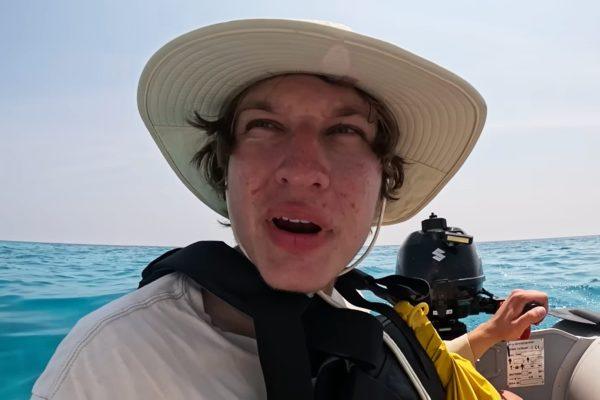
An American content creator has reignited a heated international debate after being arrested for illegally setting foot on North Sentinel Island, one of the most isolated places on Earth. Mykhailo Viktorovych Polyakov, 25, was detained by Indian law enforcement following a brief beach landing on the island, which is home to an uncontacted tribe that has lived in voluntary isolation for thousands of years.
Polyakov, who runs a YouTube channel documenting remote locations, broke his silence in a video titled “The Last Island, Part 2,” uploaded after his arrest. In it, he defends his actions, insisting his goal was never to harm the Sentinelese people but to document one of the world’s most enigmatic territories. He ignored a strict federal exclusion zone enforced by the Indian government to protect the tribe from external threats.
A Bizarre Token of Modern Civilization
During the footage, Polyakov is seen holding a Diet Coke can as he walks along the island’s shoreline. He later told Dutch outlet AD that he deliberately left the soft drink behind as a symbolic gift representing modern human civilization. In his video, he mockingly claimed the beverage would advance the tribe’s society by thousands of years.
The move has drawn widespread criticism from human rights organizations and anthropologists, who argue that such intrusions pose an immediate and lethal biological threat to the Sentinelese. The tribe has no immunity to common Western viruses, meaning even a mild illness like the flu or measles could wipe out their entire population of an estimated 150 people.
Polyakov attempted to downplay the risks, stating in his defense video that he carried updated vaccinations against respiratory illnesses like measles and influenza. He also noted that his land excursion lasted only an hour and involved zero face-to-face contact with any tribe members. However, the legal case holds a major operational mystery: Indian authorities seized his recording gear, and Polyakov has yet to explain how he recovered the published footage.
Survival International, a human rights organization that advocates for the protection of uncontacted tribes, has repeatedly emphasized that the Sentinelese people’s health remains excellent precisely because of their strict isolation. Their primary structural challenge centers on seasonal food availability, which relies heavily on shifting weather patterns. Any introduction of foreign pathogens could be catastrophic.
This incident has sparked broader conversations about the ethics of documenting isolated communities, especially in an age where social media influencers often prioritize content over consequences. For many Latinos, who come from regions with their own histories of colonization and cultural disruption, the story resonates as a cautionary tale about the dangers of imposing modern values on traditional societies.
As the debate continues, Polyakov faces legal proceedings in India, and the world watches to see whether his actions will lead to stricter enforcement of the exclusion zone—or inspire other creators to attempt similar stunts.