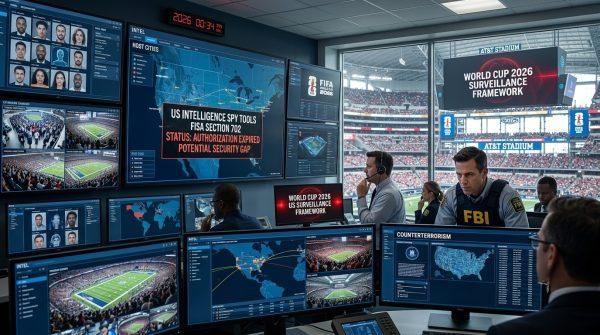
As the countdown to the World Cup 2026 continues, a quiet but critical security crisis is unfolding in Washington. The authorization for Section 702 of the Foreign Intelligence Surveillance Act (FISA)—a key tool used by US intelligence agencies to monitor foreign communications—expired this Friday, leaving the nation's surveillance framework in a precarious state just as it prepares to host the world's largest sporting event across eleven cities, including Los Angeles, New York, and México's own Ciudad de México.
Federal authorities have vowed to maintain maximum vigilance, but the legislative impasse has created what senior Senate Intelligence Committee officials describe as a "live hand grenade" in fragile negotiations. Without a renewed mandate, telecommunications providers may hesitate to comply with government data requests, fearing legal repercussions. This uncertainty could hamper the ability to detect and prevent threats during a tournament that will draw millions of visitors from 48 participating nations, many from Latin America and the Caribbean.
Why This Matters for Latino Fans
For the bicultural Latino audience—whether you're traveling from Buenos Aires to see Argentina defend its title, or cheering from a bar in Houston—this isn't just a bureaucratic squabble. The World Cup is a celebration of our shared passion for fútbol, but it's also a massive target. The FBI has warned that extremist groups often exploit international gatherings to spread violence. The surveillance program, which allows agencies to collect data on foreign targets without lengthy delays, is a cornerstone of preemptive counterterrorism. Its interruption creates a technical vacuum that could affect security in stadiums, fan zones, and transit hubs.
Meanwhile, oversight of these operations relies on the Foreign Intelligence Surveillance Court, but experts note that the legal picture remains murky without clear congressional backing. The real-time functionality of these programs depends on administrative certainty that is currently blocked by intense partisan disputes and concerns over the potential weaponization of government records against political opponents. This is a delicate balance between privacy and security that resonates deeply in Latin America, where many countries have experienced both surveillance abuses and genuine threats.
Federal agents remain deployed around the clock, analyzing threat patterns and monitoring foreign communications. But the lack of a fresh congressional mandate leaves US intelligence spy tools in a precarious position. As one official put it, "The safety of millions hinges on restoring these capabilities." The congressional recess further delays any definitive decision, limiting the time available to rectify the program's legal standing.
In the meantime, interagency coordination focuses on mitigating the impact of the legislative paralysis. Field operations are integrated with advanced data analysis to reinforce security across all host cities, ensuring a rapid response to any emerging threat. But the outlook remains complicated. The absence of clear legal tools hinders the ability to react to potential risks during these weeks of intense athletic competition, necessitating a swift return to normal intelligence operations.
This story also touches on broader themes of identity and sovereignty. For many Latinos, the World Cup is a moment of pride and unity, but it also highlights the complex relationship with US security apparatus. As lawmakers debate the renewal, they must balance individual privacy with the urgent need for effective surveillance. The international community, including human rights advocacy groups, will be watching closely. The goal is a secure environment for all participants, ensuring that the World Cup 2026 remains a celebration of sport, not a stage for tragedy.
For more on how security intersects with culture, check out our coverage of Karol G's Jalisco visit and the rumored tequila project for 2026, or read about Lux Pascal's new role in 'Miss Carbón'.