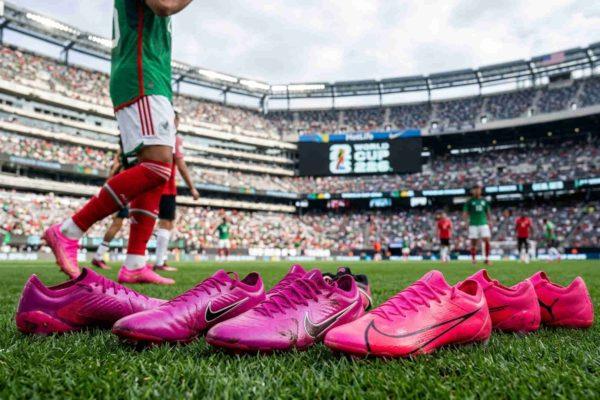
If you've been watching the 2026 World Cup, hosted across México, the United States, and Canada, you've likely noticed a bold splash of color on the pitch. Fuchsia and pink boots have become the unofficial uniform of players from nearly every national team. This isn't a coincidence or a secret pact among athletes—it's a carefully orchestrated marketing move that major sports brands have been planning for years.
Trend consultancies like WGSN and Coloro had already flagged Electric Fuchsia as a key color for the season, predicting it would dominate sports equipment catalogs. The reasoning? Fuchsia conveys energy and optimism, qualities that resonate deeply in a tournament that brings together millions of fans across the Americas and beyond. For a bicultural Latino audience, this vibrant hue also echoes the bold, celebratory spirit found in everything from Mexican alebrijes to the neon-lit streets of Buenos Aires.
Marketing, Visibility, and Digital Impact
The choice of fuchsia boots goes beyond fashion. It's a sports marketing strategy where manufacturers prioritize visibility in broadcasts and viral potential on social media. These colors contrast sharply with the green grass, making them pop in wide shots, replays, and close-ups. This ensures that brands like Adidas, Puma, and Nike reinforce their visual identity in global campaigns, reaching millions of viewers on TV and digital platforms.
Think about it: when a player like Brazil's Vinícius Júnior or Argentina's Ángel Di María sprints down the wing, those fuchsia boots are impossible to miss. They become a signature, a talking point, and a product placement all at once. For brands, it's a win-win—visibility and association with the world's biggest sporting event.
This trend also ties into broader cultural moments. For instance, the obsession with vibrant colors isn't limited to soccer; it's a theme in entertainment and lifestyle. Just as Bad Bunny's toy obsession landed him a role in Toy Story 5, fuchsia boots are a playful yet strategic choice that captures attention in a crowded media landscape.
The Exception: Messi and Ronaldo Go Their Own Way
While most players embrace the fuchsia wave, two of the sport's biggest stars are charting their own paths. Lionel Messi, in what could be his final World Cup, wears boots with a white base and light blue and gold accents—a nod to the Argentine flag and his early career. This personalized design, created by his sponsor, stands out for its sobriety and personal meaning. It's a reminder that even in a sea of vibrant colors, the game's legends will always seek to differentiate themselves.
Cristiano Ronaldo follows a similar approach. His boots feature a gold predominance, breaking from the fuchsia trend. Both players understand that their footwear is more than equipment; it's a statement of identity. For Messi, it's about honoring his roots; for Ronaldo, it's about standing out with luxury and flair.
This individuality echoes other stories of personal style in Latino culture. Consider how Jennifer Lopez navigates Hollywood's bad boys and cinematic obsession with her own unique flair. Similarly, Messi and Ronaldo use their boots to tell their own stories, even as the industry pushes a unified trend.
Ultimately, the 2026 World Cup's fuchsia boot trend is a testament to the power of sports marketing. It's a deliberate strategy that combines trend forecasting, digital visibility, and cultural resonance. For Latino fans, it's also a visual feast that reflects the vibrant, diverse spirit of the Americas. Whether you're cheering for México, Argentina, or Brazil, those fuchsia boots are a reminder that soccer is as much about style as it is about skill.
As the tournament progresses, keep an eye on the feet of your favorite players. The boots they wear are more than just footwear—they're a statement, a strategy, and a symbol of the beautiful game's ever-evolving relationship with culture and commerce.