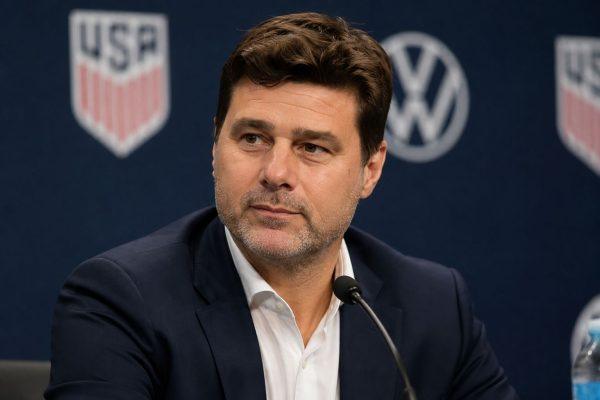
When Mauricio Pochettino took the helm of the U.S. men's national team in 2024, the mission seemed clear: prepare the Americans for a home World Cup in 2026. But after a promising tournament run, both sides have decided to extend their partnership through the 2030 FIFA World Cup, signaling a deeper commitment to building a lasting soccer identity in the United States.
The Argentine coach, known for his tactical acumen and player development, has now signed on to lead the USMNT for the next six years. This move goes beyond the typical cycle-based approach that has defined U.S. Soccer for decades. Instead, it represents a strategic pivot toward long-term growth and stability.
Why the extension makes sense
The 2026 World Cup, hosted by the U.S., Canada, and Mexico, was a turning point. The U.S. team topped its group with a record points haul and played an aggressive, attacking style that reignited excitement among fans. Although they were eliminated in the Round of 16 by Belgium, the performance convinced federation leaders that a coaching change would disrupt the progress they've finally started to see.
By extending Pochettino now, U.S. Soccer avoids another transition and gives its core players—like Christian Pulisic, Folarin Balogun, and a wave of emerging talent—continuity during what should be their prime years. The next World Cup, hosted by Spain, Portugal, and Morocco, will be a chance for this generation to mature and compete at the highest level.
A broader role for Pochettino
The new agreement isn't just about match preparation. Pochettino's responsibilities will expand to include player development pathways, coaching education, and collaboration across the professional game. He's becoming more of a sporting architect than a traditional national team manager, helping shape the entire ecosystem of American soccer.
This holistic approach is reminiscent of how some European federations operate, where the national team coach is deeply involved in the development pipeline. For a country with the resources and diversity of the U.S., this could be a game-changer.
Turning down the club game
Pochettino has long been linked with a return to European club football, particularly the Premier League, where he managed Southampton, Tottenham Hotspur, and Chelsea. By committing through 2030, he's effectively postponing those possibilities to focus on what could become the longest national team project of his career.
This decision also aligns with a growing trend among top coaches to embrace international roles for their unique challenges and the chance to build something lasting. For Pochettino, the U.S. offers a blank canvas—a soccer market with immense potential but still developing its identity.
A new philosophy for U.S. Soccer
For decades, the USMNT has entered each World Cup cycle with a new coach and a new vision. This extension represents a departure from that pattern. U.S. Soccer is betting that sustained success comes from continuity, a consistent playing style, and a coach who understands the long-term direction of the program.
Whether this strategy pays off with deeper World Cup runs remains to be seen. But by locking in Pochettino through 2030, the federation has made its intentions clear: it's not just planning for the next tournament—it's trying to build the next generation of American soccer.
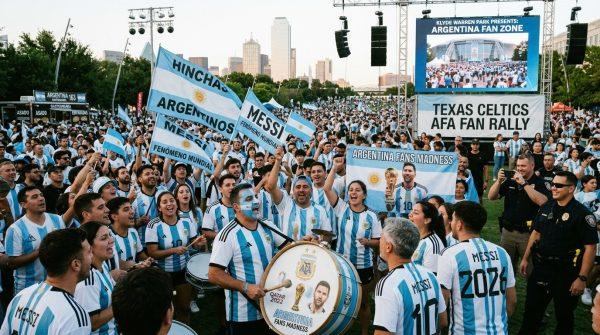
For Latino fans, this news resonates beyond the pitch. Pochettino, an Argentine, brings a Latin American footballing philosophy that values technical skill, tactical flexibility, and emotional connection. His presence could help bridge the gap between the U.S. soccer establishment and the vibrant Latino communities that have long been the sport's lifeblood here.
As the U.S. prepares for a future that includes a World Cup on home soil and beyond, Pochettino's extended tenure offers a sense of direction. It's a bold move, but one that could finally give American soccer the stability it has craved.