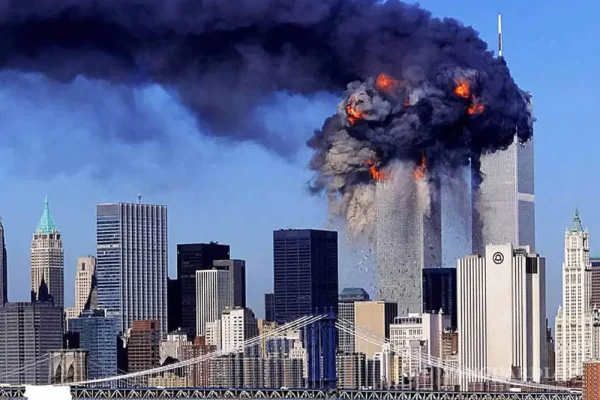
It has been nearly a quarter-century since the September 11 attacks, yet the conspiracy theories that emerged in their wake have not faded. Instead, they have evolved, finding new life on social media platforms and in the darker corners of the internet. For many Latinos across the Americas and the diaspora, the events of that day reshaped global politics and security, but for a persistent minority, the official story remains incomplete.
According to a 2023 YouGov survey, roughly 20% of Americans harbor doubts about the official timeline of the attacks. This skepticism is not new, but it has been amplified by a digital ecosystem that rewards sensationalism over substance. As researcher Daniel Jolley explains, sudden catastrophes leave psychological voids—uncertainty, a need for control, and fear—that alternative narratives rush to fill. "In that space," he says, "conspiracy theories flourish as a way to make sense of the inexplicable."
The roots of 9/11 conspiracy theories
Conspiracy theories about 9/11 began almost immediately after the attacks. Within hours, internet forums were buzzing with claims that the collapse of the World Trade Center towers was a controlled demolition, or that the U.S. government had prior knowledge. These theories gained traction because they offered a simple, if terrifying, explanation for a complex and chaotic event. For individuals already predisposed to distrust authority—whether due to personal experiences or broader societal disillusionment—these narratives provided a sense of agency.
Psychologists point out that people who feel anxious or powerless are more susceptible to such claims. Fringe groups have long exploited these vulnerabilities, weaving together half-truths and outright fabrications to create a compelling, if false, alternative reality. The result is a persistent subculture that rejects the findings of official investigations, including those by the National Institute of Standards and Technology and independent engineering firms.
How social media fuels the fire
Social media platforms have become the primary vector for spreading 9/11 conspiracy theories. Algorithms designed to maximize engagement often prioritize shocking or controversial content over factual reporting. This creates echo chambers where users are repeatedly exposed to the same misinformation, reinforcing their existing biases. A 2021 study by the Massachusetts Institute of Technology found that false news spreads faster and reaches more people than the truth, particularly on platforms like X (formerly Twitter) and Facebook.
For Latino communities, who are heavy users of platforms like WhatsApp and TikTok, the challenge is particularly acute. Misinformation often circulates in Spanish-language groups, where it can be harder to debunk. This is why media literacy programs, such as those promoted by the Amadeu Antonio Foundation in Germany, are increasingly important. They teach people to critically evaluate sources and recognize the hallmarks of conspiracy theories, such as unfalsifiable claims and the dismissal of all official evidence as a cover-up.
The societal cost of conspiracy theories
The impact of 9/11 conspiracy theories extends beyond mere historical debate. They contribute to a broader climate of distrust that fuels other forms of misinformation, from climate change denial to anti-vaccine sentiment. Historian Claus Oberhauser warns that this erosion of trust in science and institutions is dangerous. "We must relearn how to trust in verifiable facts," he says, "otherwise, we risk losing the shared foundation of reality that holds society together."
In Latin America, where political instability and corruption have historically bred skepticism toward governments, the appeal of conspiracy theories can be even stronger. However, experts argue that the most effective countermeasure is not confrontation but conversation. Engaging respectfully with believers, examining credible sources together, and fostering transparent institutional communication can help break the cycle of radicalization.
As we mark the 25th anniversary of 9/11, it is clear that the battle against misinformation is far from over. But by understanding the psychological and digital forces that sustain these theories, we can better equip ourselves to challenge them. For a generation that grew up in the shadow of the attacks, the truth remains the most powerful weapon against the distortions of history.