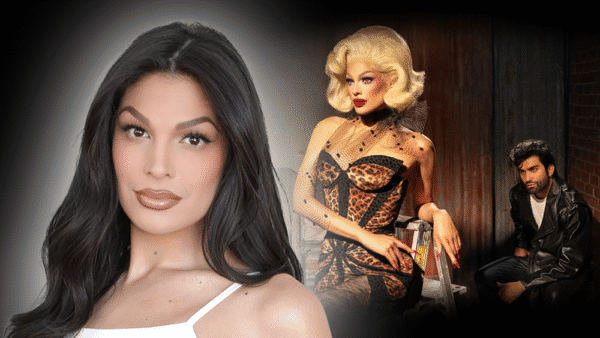
In the vibrant intersection of drag performance, Latin pop culture, and mainstream television, few names shine as brightly as Valentina Xunaxi. For a bicultural audience that navigates between English and Spanish, between Los Angeles and México City, her story resonates as a powerful narrative of artistic ambition, cultural pride, and personal authenticity.
A Star Forged in California and México
Born Valentina Xunaxi Leyva in Bell, California, in 1991 to Mexican parents, her artistry has always been a tapestry woven from both sides of the border. Long before her television debut, she was a fixture in Los Angeles' dynamic queer nightlife, honing a persona that blended classic Hollywood glamour with the bold flavors of her heritage—famously inspired by the iconic Valentina hot sauce. Her early victory in a club version of Dragula in 2015 was a clear signal of a performer destined for larger stages.
That destiny arrived in 2017 with her appearance on Season 9 of RuPaul's Drag Race. Valentina immediately distinguished herself with a serene, almost regal confidence and a meticulously crafted aesthetic. Winning the second challenge, she became an instant fan favorite, though her run was punctuated by what is now a legendary moment in the show's history: a masked lip-sync that ultimately cost her the competition but cemented her status as unforgettable. Voted "Miss Congeniality" by fans—playfully dubbed "Miss Fan Favorite" by fellow queens—her impact was undeniable.
Building a Multifaceted Empire
Valentina's post-Drag Race career exploded, proving she was far more than a reality TV alum. She returned for All Stars 4, showcasing evolved skills. Beyond the franchise, she hosted her own series, La Vida De Valentina, became a beauty authority for Vogue México, modeled for Elle México, and stepped into acting roles that ranged from Angel in Fox's live Rent musical to a role in the acclaimed Netflix series La Casa de las Flores.
Her work consistently celebrates Latin American culture. From Frida Kahlo-inspired looks to tributes to Spanish singer Isabel Pantoja, she makes her heritage central to her art. This dedication made her a natural choice to co-host the inaugural season of Drag Race México in 2023 alongside Lolita Banana, a pivotal role in expanding the drag competition's cultural footprint across Latin America. While she did not return as co-host for the second season, her contribution in launching the franchise was significant.
Valentina's journey of personal identity has unfolded publicly with grace. In 2019, she came out as non-binary. Then, on her 34th birthday in 2024, she shared a profound update with her fans. "I've been transitioning for a while now, doing it privately," she announced, "but today I wanted to open up... I've decided to take today to declare myself as a transgender woman." This affirmation places her among a growing number of transgender Latin American artists claiming their space and visibility.
A Legacy of Representation and Glamour
Today, Valentina Xunaxi stands as a multifaceted icon: a performer, fashion muse, actor, and a proud representative of Mexican and queer culture. Her story is not just one of fame, but of using a platform to amplify marginalized voices and challenge norms. She represents a generation of artists who refuse to compartmentalize their identities, instead fusing them into a powerful, glamorous whole.
Her influence extends beyond drag, touching broader conversations about identity and heritage in the Latino diaspora. As she embarks on this new chapter as a transgender woman, Valentina continues to inspire by living her truth with the same serene confidence that first captivated audiences. Her path reminds us that self-expression is an ever-evolving art form, and cultural pride is a source of limitless creativity.