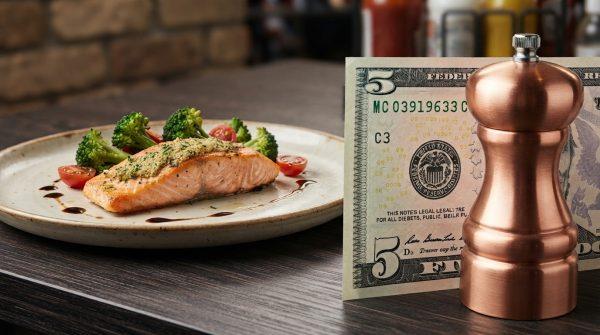
The familiar ritual of calculating a 20% tip may be fading at a growing number of US restaurants. From San Francisco to New York, a quiet revolution is underway: owners are ditching voluntary gratuities and moving to fixed hourly wages, often $30 to $40 an hour. But as menu prices climb to cover those wages, diners are discovering that the change doesn't necessarily mean a lighter bill.
For Latino workers, who make up a significant share of the restaurant workforce—especially in cities like Los Angeles, Miami, and Houston—this shift carries both promise and uncertainty. On one hand, stable pay could mean more predictable income and less reliance on the whims of customers. On the other, it could erode the higher earnings that skilled servers once took home during busy weekend shifts.
Why restaurants are abandoning the tip jar
The federal tipped minimum wage has remained at $2.13 per hour for decades, a figure that hasn't changed since 1991. In practice, that means servers depend on tips to reach at least the standard minimum wage, but the system is fraught with inequities. Front-of-house staff often earn far more than the cooks and dishwashers who work just as hard behind the scenes. That gap has pushed some owners to experiment with no-tip models, where all staff receive a consistent hourly wage.
Rachel Miller, who runs a restaurant in Massachusetts, charges $102 for a seven-course tasting menu before 6 p.m. and $126 for nine courses. Her goal: ensure that every employee, from the line cook to the sommelier, earns a fair wage without depending on customer generosity. Similarly, in Oakland, documentary filmmaker Cassidy Van der Kamp now earns $21 an hour as a server, a far cry from the unpredictable tip-based income she once relied on.
But the transition isn't without friction. Cornell University researchers note that diners often misjudge the true cost of a meal when tips are included in the price. A $40 entrée might seem steep, even if it replaces a $30 entrée plus a $10 tip. That psychological barrier has led some restaurants to revert to traditional tipping after seeing customer pushback.
The hidden costs of no-tip policies
Beyond menu prices, there's another wrinkle: service charges. When restaurants add a fixed service fee to the bill, that money is treated as business revenue, not as a direct tip to employees. That means higher tax liabilities for the restaurant, which can trickle down to prices. Some owners have tried to offset this by absorbing costs, but that's not always sustainable.
In New York, the vegetable-focused restaurant Dirt Candy pays its staff $30 an hour and has built a loyal following. Owner Amanda Cohen says customers appreciate the transparency—no surprises at the end of the meal. Yet, even she acknowledges that the model isn't for everyone. "It's a different way of thinking about dining," she told reporters. "But it's one that respects the work of everyone in the kitchen and the front of the house."
What diners think
Consumer sentiment is mixed. A Pew Research Center survey found that 72% of US adults believe tipping is now expected in more places than it was five years ago. That fatigue is real, especially among younger diners who are tired of being prompted to tip at coffee shops and takeout counters. But when it comes to sit-down restaurants, many still prefer the traditional model, where they control the tip based on service quality.
For Latino diners, who often come from cultures where tipping is less ingrained, the shift could be welcome. In many Latin American countries, a service charge is automatically added to the bill, and extra tipping is optional. That familiarity might make the no-tip model more appealing to bicultural Latinos who find the US tipping culture confusing or burdensome.
The future of service culture
As more restaurants experiment with no-tip policies, the industry is watching closely. Some predict that the trend will remain niche, limited to high-end establishments that can afford to set their own rules. Others believe that as labor costs rise and workers demand fairer treatment, the model will spread.
For now, the advice for diners is simple: read the menu carefully. If a restaurant advertises "no tipping," expect higher prices. And if you're unsure, ask—most places are happy to explain their policy. After all, the goal is to make dining out more equitable for everyone, from the server to the chef to the guest.
For those watching their budgets, this shift might feel like a raise that doesn't always mean more savings. But for many workers, it's a step toward financial stability. And for diners, it's a chance to support a more transparent and fair industry.
As the debate continues, one thing is clear: the way we pay for meals is changing, and it's worth paying attention to. Whether you're a diner or a worker, understanding these shifts can help you make informed choices. And if you're worried about money app scams or other financial pitfalls, staying informed is your best defense.