Back in 1960, when the world’s population was just over 3 billion, a physicist named Heinz von Foerster published a paper in Science that set a precise date for a kind of societal reckoning: November 13, 2026. That date is now just months away, and the paper has resurfaced in online conversations, sparking both curiosity and a fair amount of eye-rolling.
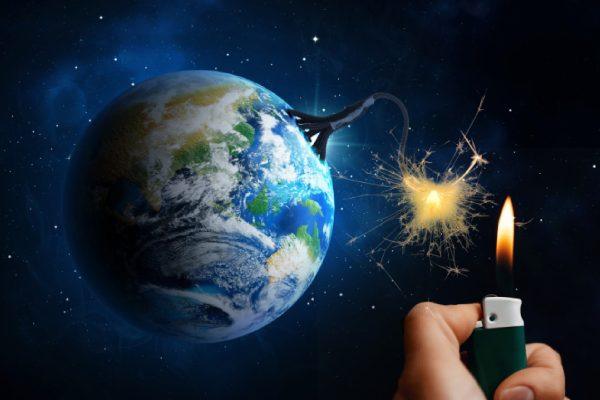
Von Foerster, an Austrian-American thinker, wasn’t predicting an asteroid strike or a nuclear war. His model was purely mathematical, based on the observation that human population growth was accelerating. He argued that if growth continued at the rates seen in the mid-20th century, the system would hit a wall—a point where the sheer number of people would outstrip the capacity of social and technological structures to cope. He called it the “doomsday” of the population explosion.
What the 1960 model actually said
The paper, co-authored with Patricia M. Mora and Lawrence W. Amiot, used a formula that projected an infinite population on that November day in 2026. Of course, infinite population is a mathematical artifact, not a literal forecast. But the underlying warning was serious: exponential growth cannot continue forever, and at some point, something has to give.
Von Foerster’s work fits into a long tradition of demographic anxiety that goes back to Thomas Malthus in the 18th century. Unlike Malthus, who focused on food supply, Von Foerster was more concerned about the limits of social and technological systems. He wasn’t just a doomsayer; he was a systems thinker who saw the world as an interconnected whole.
AI warnings from a 20th-century mind
What makes Von Foerster’s legacy even more intriguing is that he also had sharp things to say about artificial intelligence. In the 1990s, he warned against confusing automated routines with genuine human cognition. He argued that machines could mimic conversation but would never replicate the messy, emotional, embodied experience of being human. That critique feels eerily relevant today, as we grapple with chatbots that seem to understand us but don’t really.
His early observations about human attachment to machines—how we project feelings onto interfaces—resonate with current debates about AI companions and the ethics of synthetic relationships. For a man who died in 2002, he had a remarkable grasp of where technology was heading.
Modern demography: a different story
So, should we be stocking up on canned goods for November 13, 2026? Probably not. Contemporary demographers, including those at the United Nations, project that the global population will peak around 10.3 billion in the 2080s and then gradually decline. That’s a far cry from the infinite growth Von Foerster’s model implied.
What changed? Birth rates have fallen dramatically in many parts of the world, including Latin America. Countries like México, Brazil, and Argentina have seen fertility rates drop below replacement levels. Urbanization, education, and women’s economic participation have all contributed to this shift. The “population bomb” that seemed so imminent in the 1960s has been defused, at least in its most extreme form.
Still, Von Foerster’s paper remains a fascinating artifact—a reminder of how mathematical models can capture the anxieties of an era. It also serves as a cautionary tale about the limits of prediction. Just as his doomsday date won’t come to pass, today’s projections about AI and climate change could also be off the mark, for better or worse.
For Latino audiences, the story resonates because our communities are deeply affected by demographic trends. From the labor market shifts that impact Latino workers to the budget decisions in cities with large Latino populations, the future is being written now. And while Von Foerster’s date may be a mathematical curiosity, the questions he raised about sustainability and technology are more relevant than ever.
As we approach November 13, 2026, it’s worth remembering that the future is not set in stone. We have the power to shape it—through policy, through culture, and through the choices we make every day. Von Foerster gave us a warning, but he also gave us a challenge: to think critically about the systems we build and the world we leave to the next generation.