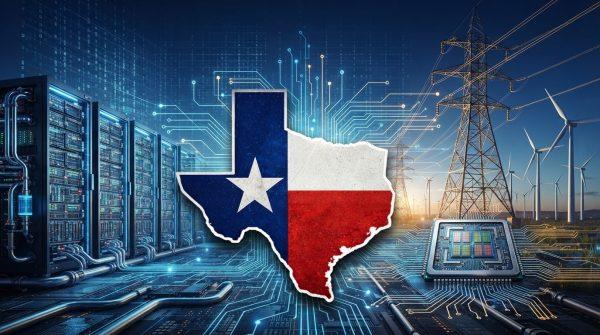
The artificial intelligence boom is reshaping the digital landscape across the United States, and Texas has emerged as a powerhouse. New data from Synergy Research Group shows the Lone Star State recorded a 71% jump in operational AI data center capacity over the latest period, far exceeding the global average growth of 36%. This surge cements Texas as a critical hub in the North American digital ecosystem, drawing investment from tech giants like Amazon, Microsoft, and Google.
The United States continues to dominate the global market, accounting for 57% of all hyperscale capacity worldwide. Fifteen of the top 20 largest hyperscale infrastructure markets are on American soil, according to the same report. Northern Virginia alone holds nearly 12% of global capacity, with Loudoun County housing around 250 operational data centers. But Texas is quickly closing the gap, thanks to its abundant land, relatively stable power grids, and business-friendly policies.
Why Texas? Land, power, and incentives
Choosing a location for a massive data center isn't random. John Dinsdale, chief analyst at Synergy Research Group, explains that companies weigh several factors: "Clients, land price and availability, electricity, networks, incentives and political stability." Texas offers a compelling mix of all these, making it a magnet for new projects. The state's regulatory environment and access to renewable energy sources, particularly wind and solar in West Texas, add to its appeal.
However, this rapid expansion isn't without friction. Data centers are notoriously resource-hungry, consuming vast amounts of electricity and water for cooling. Local communities and governments are starting to push back. In some regions, authorities have imposed moratoria on new data centers due to environmental concerns. For instance, Loudoun County expects to collect roughly $1.3 billion in taxes from tech equipment next year, yet a prior report estimated that Virginia's tax concessions could cost $1.94 billion. This tension between economic gain and sustainability is a growing challenge.
For Latino communities across Texas, especially in areas like San Antonio, Houston, and the Rio Grande Valley, the data center boom brings both opportunities and concerns. While these facilities can create jobs and boost local economies, they also strain water resources in drought-prone regions. Community leaders are urging developers to adopt sustainable practices and ensure that benefits reach all residents, not just corporate shareholders.
Emerging markets and shifting geography
While Northern Virginia and Texas lead, other states are entering the fray. Indiana, Tennessee, and Canton have joined the global top 20, displacing Tokyo, Sydney, and South Carolina. This geographic shift reflects a broader trend: power limitations and community resistance are pushing developers to look beyond traditional tech enclaves. Emerging international markets like Shanghai, Johor, and Jakarta are also growing rapidly, though the U.S. remains the undisputed leader.
Analysts note that combining the Beijing metropolitan area with Northern Virginia yields a joint 17% of all hyperscale capacity, highlighting the concentration of power in a few key regions. But as the industry evolves, the focus is shifting toward operational efficiency and regulatory compliance. "Efficient management is the primary key to strengthening North American technological leadership," says Dinsdale.
For Texas, the future looks bright, but not without challenges. The state's power grid, which faced scrutiny during Winter Storm Uri in 2021, must handle increased demand. Protecting residents from power shutoffs during extreme weather is a priority. Meanwhile, the regulatory landscape for other industries, like food trucks, is also evolving, showing that Texas is a state in flux.
As the digital economy expands, the interplay between technology, community, and environment will define the next chapter. Texas is at the forefront, and the world is watching.