Early Wednesday morning, a piece of SpaceX hardware met its end on the lunar surface. The second stage of a Falcon 9 rocket, weighing roughly four tons, slammed into the Moon at over 8,700 kilometers per hour, carving out a new crater near the visible edge of the lunar disk. The collision was confirmed by orbital trajectory calculations, though no real-time imagery was possible due to the impact's location.
From launch to lunar impact
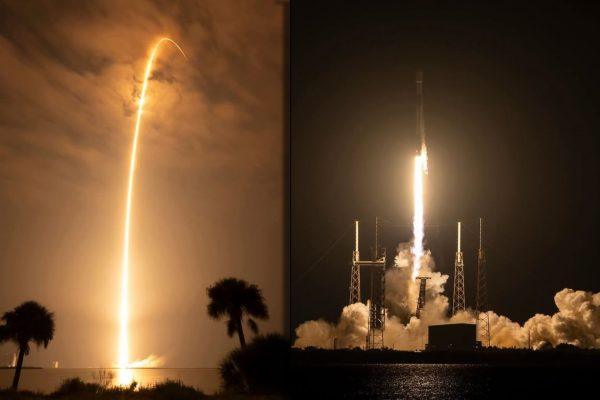
The rocket stage came from a January 15, 2025, mission that delivered two commercial robotic lunar landers into transit orbit. After completing its primary job and deploying its payloads, the upper stage was left in a chaotic elliptical orbit. Over the following months, it drifted through space until lunar gravity captured it, setting the stage for Wednesday's impact.
Scientists, including researchers affiliated with NASA, confirmed that the collision posed zero hazard to Earth. The energy released was equivalent to about three tons of TNT, enough to create a crater 20 to 30 meters in diameter and send a plume of lunar soil and rock fragments up to 100 kilometers high.
A scientific silver lining
While the crash was unintended, it turns abandoned hardware into a brief scientific opportunity. As sunlight illuminates the rising debris, astronomers plan to use ground-based telescopes to study the ejected material. This will help planetary scientists better understand the mechanical properties of the lunar surface and its subsurface characteristics.
Such data is increasingly valuable as more nations and private companies set their sights on the Moon. The event also underscores the growing issue of space debris in cislunar space. With lunar missions becoming more frequent, tracking and managing this debris is essential for the safety of future landings.
For the Latino community, this story resonates on multiple levels. SpaceX has deep ties to Latin America, from its launch sites in Texas and Florida to the many Latino engineers and technicians who work on its rockets. In fact, a Mexican welder who bet on SpaceX became a millionaire after the company's IPO, highlighting the economic opportunities that space exploration can bring to the region.
Moreover, the growing interest in lunar exploration mirrors the ambitions of Latin American nations like México and Argentina, which have been developing their own space programs. As the world looks to the stars, the region is carving out its place in the new space race.
This incident also serves as a reminder of the challenges ahead. With more rockets launching and more hardware left in orbit, the risk of unintended collisions increases. The data gathered from this crash will help refine geological models and improve landing safety protocols for upcoming missions, benefiting all of humanity.
For now, the Moon has a new scar, but it's one that carries a wealth of knowledge. As we continue to explore, every piece of debris—intentional or not—can teach us something about our celestial neighbor.