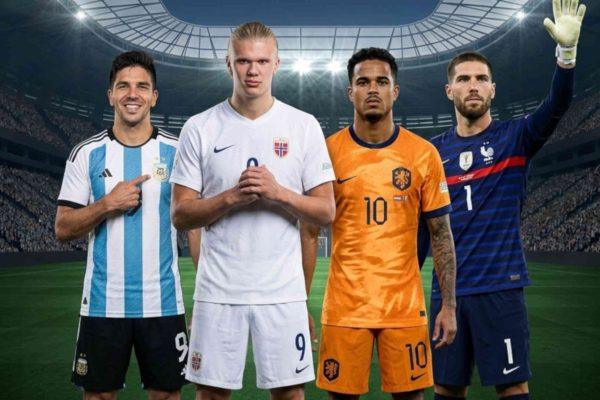
The 2026 World Cup is not just a tournament of nations—it's a stage where the next generation of football royalty steps into the spotlight. Players like Giovanni Simeone (Argentina), Luca Zidane (France), and Justin Kluivert (Netherlands) carry surnames that echo through football history, but they are here to build their own legacies. For a bicultural Latino audience, this narrative resonates deeply: the weight of family heritage, the pride of representing your country, and the relentless drive to prove yourself on your own terms.
More Than a Name: The Pressure and the Promise
Carrying a legendary surname in football means every touch, every pass, every goal is scrutinized through the lens of a father's achievements. For Giovanni Simeone, son of Diego Simeone—the iconic Argentine midfielder and now Atlético Madrid manager—the expectations are immense. Yet, Giovanni has carved his own path with a powerful presence in the box and a knack for crucial goals. Similarly, Luca Zidane, son of Zinedine Zidane, has emerged as a reliable goalkeeper, stepping out of the shadow of his father's genius. These players understand that their surnames opened doors, but only their talent keeps them on the pitch.
In Latin America, where football is almost a religion, this generational shift is particularly poignant. From Buenos Aires to Bogotá, fans watch these young men with a mix of nostalgia and hope. They remember the fathers' glory days—Diego Simeone's tenacity in the 1998 World Cup, Zinedine Zidane's magic in 1998 and 2006—and now they witness the sons writing new chapters. The pressure is real, but so is the opportunity. As Messi and Mbappé turn the World Cup scoring race into a historic duel, these sons of legends add another layer of drama to the tournament.
Forging Identity on the Global Stage
What sets these players apart is their ability to channel expectation into performance. Justin Kluivert, son of Dutch legend Patrick Kluivert, has shown flashes of brilliance for the Netherlands, using his pace and skill to trouble defenses. Erling Haaland, though not a Latino player, represents a parallel story of legacy—his father Alf-Inge Haaland played in the Premier League, and Erling has become a global superstar in his own right. For Latino fans, the lesson is clear: heritage is a foundation, not a ceiling.
The 2026 World Cup also highlights how football evolves across generations. The tactical sophistication of modern football demands more than just inherited talent; it requires adaptability, intelligence, and resilience. These young players have honed their craft in top academies across Europe and South America, from La Masia to River Plate's youth system. Their presence in the tournament is a testament to the enduring power of football as a family affair, but also to the individual grit required to succeed at the highest level.
For the Latino diaspora, stories like these are deeply familiar. Many families have navigated the balance between honoring tradition and forging new identities in the United States or elsewhere. The sons of legends at the World Cup embody that same tension—and triumph. As the Netherlands remain football's greatest team without a World Cup, players like Kluivert carry the hope of changing that narrative. Meanwhile, for Argentina, Giovanni Simeone represents the next wave of talent after the Messi era, a reminder that the albiceleste legacy continues.
Ultimately, the 2026 World Cup is not just about honoring the past—it's about witnessing the future. These sons of legends are not content to be footnotes in their fathers' stories. They are writing their own, one match at a time. Whether they lift the trophy or not, they have already proven that the family legacy is alive and well, but it's their own talent that will define their place in football history.