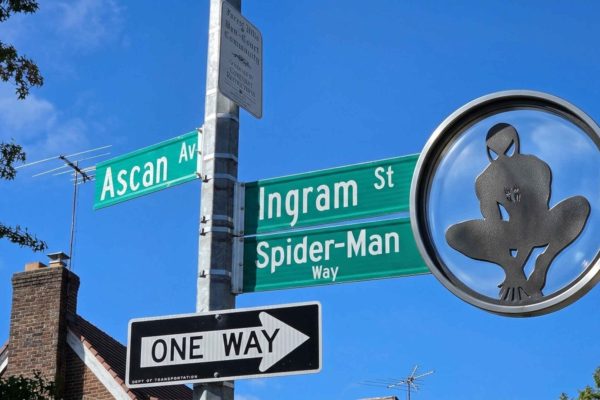
On a crisp October morning in Forest Hills, Queens, a quiet residential corner became the epicenter of superhero history. Council Member Lynn Schulman led the unveiling of a street sign bearing the words “Spider-Man Way” at the intersection of Ingram Street and Ascan Avenue—the exact address where Peter Parker, the friendly neighborhood web-slinger, called home in the pages of Marvel Comics.
The ceremony, held on October 12, brought together fans of all ages, local officials, and even relatives of the character's legendary creators. For the bicultural Latino community in New York and beyond, this moment resonates deeply: Spider-Man has always been the quintessential New York hero—a working-class kid from Queens who juggles rent, relationships, and the weight of saving the city, a narrative that mirrors the experiences of many immigrant families across the boroughs.
A corner with comic-book history
The choice of location was no accident. As Marvel's executive editor Nick Lowe explained during the event, a 1989 comic book officially established that Peter Parker lived at 20 Ingram Street, right at the corner of Ascan Avenue. That detail, tucked into a panel decades ago, became the blueprint for this tribute. Mark Ditko, a relative of Steve Ditko—the artist who co-created Spider-Man with Stan Lee—was present, adding a personal touch to the proceedings. His presence honored the vision of two men who gave the world a hero who battles supervillains while also worrying about homework, bills, and family obligations.
For many Latinos in Queens, this story hits close to home. The borough is a mosaic of cultures—Colombians in Jackson Heights, Dominicans in Corona, Mexicans in East Elmhurst—and the idea of a hero who rises from modest beginnings is a familiar narrative. The street sign is more than a tourist attraction; it's a validation that the everyday struggles and triumphs of working-class New Yorkers are worthy of celebration.
A new pilgrimage site for fans
Already, the corner has become a magnet for comic-book enthusiasts and movie buffs. Marvel's official social media accounts shared videos of the unveiling, sparking a wave of excitement among fans worldwide. Visitors are expected to flock to Forest Hills to snap photos with the sign, turning a once-ordinary intersection into a geek-culture landmark. The tribute also ties into the broader New York identity that Spider-Man embodies—a hero who is as much a part of the city's fabric as its subways and skyline.
This isn't the first time Queens has honored its fictional native son. The neighborhood has long embraced its connection to the character, and this street naming cements that bond. For those who grew up reading the comics or watching the animated series, standing at this corner feels like stepping into a beloved story. And for a new generation of Latino fans, it's a reminder that heroes can come from anywhere—even a modest apartment in Queens.
The event also highlighted the importance of public spaces in telling stories. As Brooklyn's Box Street Park recently broke ground after a two-decade wait, New Yorkers understand the value of community landmarks. Similarly, the Spider-Man Way sign is a small but meaningful addition to the city's cultural landscape.
For those planning a visit, the corner is easily accessible by subway, and the neighborhood offers a taste of the diverse Queens that Spider-Man himself would call home. Whether you're a lifelong fan or just curious, this tribute is a testament to the enduring power of a character who, despite his superhuman abilities, remains deeply human.
As the sun set over Forest Hills, the new sign glowed under the streetlights, a beacon for dreamers and believers. In a city that never sleeps, this corner now holds a piece of pop-culture history—and a reminder that even the most ordinary places can become extraordinary.