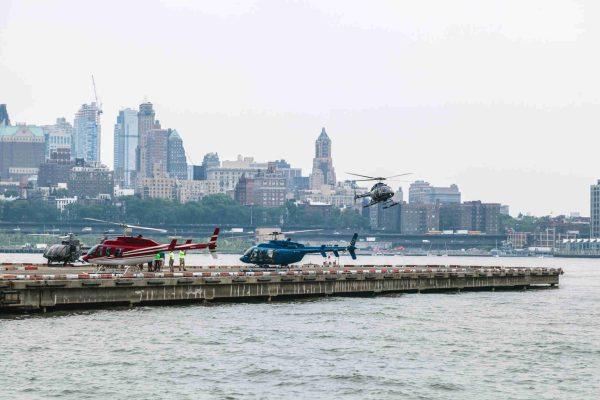
For years, the relentless thrum of tourist helicopters over the Hudson River has been a source of frustration for residents on both sides of the water. Now, that frustration has boiled over into a full-blown legal battle that could reshape how visitors experience New York City from above.
The town of Kearny, New Jersey, has filed a lawsuit in Hudson County Superior Court against FlyNYON and HHI Heliport, demanding a temporary order to restrict nighttime takeoffs and a complete ban on recreational tours. The move comes after years of complaints about noise and safety concerns, and it has drawn support from neighboring communities like Jersey City, Hoboken, Bayonne, and Union City, which have joined forces through a cost-sharing agreement.
Broken promises and a 2014 agreement
At the heart of the lawsuit is a 2014 agreement. When the Zoning Board approved the heliport's maintenance facilities, operators promised that tourist flights would never be offered and that operations would be limited to daytime hours. But local authorities say those promises were broken almost immediately.
“They made promises under oath, and they ignored them,” said Kearny Mayor Carol Jean Doyle. “Our residents have been dealing with this noise and the constant threat of accidents for too long.”
The lawsuit alleges that operators have repeatedly violated the terms of that agreement, and that the heliport has become a hub for tourist flights that operate well beyond the agreed-upon schedule.
Audit reveals widespread violations
To back up their claims, Kearny hired an aviation safety firm to analyze the heliport's operational logs. The audit, which covered flights between October 2024 and August 2026, found that 23.8% of takeoffs and landings occurred outside the permitted time frame. FlyNYON was responsible for the majority of those violations.
Despite previous penalties imposed by local government, the irregular operations continued. The audit's findings have become a key piece of evidence in the lawsuit, painting a picture of an industry that operates with little regard for the communities it affects.
“This is not just about noise,” said a spokesperson for the coalition of towns. “It's about safety. We've seen the tragedies on the Hudson, and we don't want another one.”
The memory of past aerial accidents in the river looms large, and thousands of noise complaints have been filed over the years. For many residents, the helicopters are a constant reminder of the risks they pose.
Legislative push on both sides of the river
While the courts weigh the case, lawmakers are also taking action. In New Jersey, the Senate is advancing proposals to tax non-essential flights and give municipalities more control over land use. In New York City, council members are debating whether to limit access to local heliports to public safety, emergency, and press operations only.
These efforts reflect a growing bipartisan consensus that the current situation is untenable. “We're not trying to kill the industry,” said one New Jersey legislator. “We're trying to make it responsible.”
The outcome of Thursday's hearing could be a turning point. If the court grants the requested restrictions, it would mark a significant victory for residents who have long demanded a halt to the constant noise and disruption. It could also set a precedent for other cities grappling with similar issues.
For now, the future of tourist helicopter flights over New York City hangs in the balance. The decision will not only affect the companies involved but also the thousands of residents who have been living under the flight path for years.
As the legal battle unfolds, one thing is clear: the days of unchecked helicopter tourism over the Hudson may be numbered. And for the communities that have fought so hard for relief, that would be a welcome change.