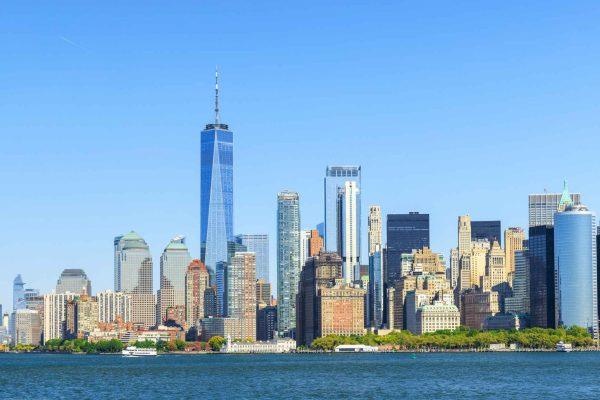
New York City, a global hub where millions of Latinos from across the Americas have built their lives, is facing a slow-motion crisis beneath its streets. The weight of its 1.1 million buildings—estimated at a staggering 1.68 billion pounds—is causing the ground to sink, a phenomenon scientists compare to wet sand giving way under pressure. This subsidence, combined with rising sea levels, effectively doubles the city's risk of catastrophic coastal flooding, putting neighborhoods from Jackson Heights to Bushwick in the crosshairs.
The Wet Sand Mechanism Beneath the Skyline
Much of New York City's foundation rests on a precarious mix of soft clay, loose glacial deposits, and artificial landfill—material used historically to reclaim marshes and waterfronts for development. When subjected to the immense load of skyscrapers, this subsoil behaves like wet sand on a beach: moisture is displaced, and the ground compresses millimeter by millimeter. Satellite data and building codes reveal that the city is sinking at an average rate of one to two millimeters per year, but this is not uniform. In high-density zones like Lower Manhattan, Brooklyn, and Queens, the rate doubles, exceeding two millimeters annually.
For Latino communities in Queens—home to vibrant enclaves from Corona to Elmhurst—this is not an abstract geological fact. These areas sit on some of the softest shoreline landfills, accelerating soil compaction and threatening the very infrastructure that connects families to jobs, schools, and each other. Subway tunnels, highways, and bridge foundations are already showing subtle tilting, a sign that the ground is shifting beneath the city's most essential arteries.
Interlocking Threats: Subsidence and Climate Change
The sinking ground compounds the dangers of climate change. As ocean waters rise at a parallel rate of one to two millimeters per year due to global warming, land subsidence effectively doubles the relative flood risk. Low-lying residential and commercial districts—including those in Brooklyn's Sunset Park, a historic Puerto Rican and Mexican hub—now face chronic sunny-day flooding during high tides. Severe coastal storms and hurricanes, like Superstorm Sandy in 2012, gain even more destructive potential as they strike maritime defenses that are already structurally weakened and lowered.
This is a crisis that hits close to home for the city's 2.4 million Latino residents, many of whom live in neighborhoods built on reclaimed land. The affordable housing crisis already strains these communities; now, the ground itself is becoming unreliable.
Engineering Limits and the Future of Vertical Growth
Urban planners and structural engineers are exploring radical solutions, from mandating ultra-lightweight composite materials for new buildings to implementing advanced chemical ground freezing and soil reinforcement. But retrofitting over a million existing structures presents an unprecedented financial and logistical challenge. The city's continuous erection of new corporate towers only adds weight, raising critical questions about the ecological sustainability of vertical growth against the rigid geological limits of the earth.
For Latinos who have made New York City their home—whether from México, Puerto Rico, the Dominican Republic, or Colombia—this story is not just about engineering. It is about the future of communities that have shaped the city's cultural and economic fabric. As the city sinks, the need for resilient infrastructure and equitable adaptation becomes urgent. The alternative is a future where the neighborhoods that define Latino New York are the first to flood.