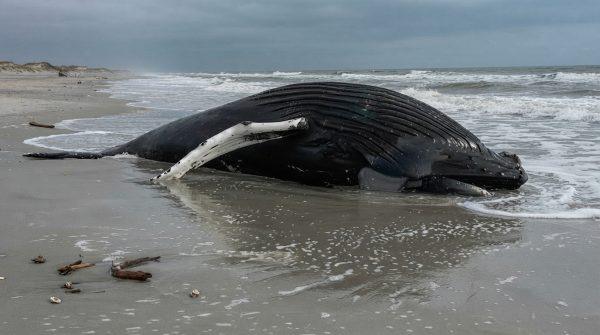
Along the Jersey Shore, a somber sight greeted early risers this week: a dead whale washed up on the sand, drawing immediate attention from locals and prompting a coordinated response from marine rescue teams. The Marine Mammal Stranding Center, based in Brigantine, New Jersey, confirmed the stranding and urged beachgoers to steer clear of the area while crews assess the situation.
The whale, which had already begun to decompose, was found on a beach in Monmouth County, though officials have not yet released the exact location. The stranding center's hotline (609-266-0538) has been active for years, and it was a call from a boater that first alerted them to the carcass floating near shore before ocean currents pushed it onto dry land.
Safety warnings and public response
Local authorities have issued an unusual warning for the affected stretch of beach: do not approach the whale, do not touch any parts of it, and keep pets on a leash. The advanced state of decomposition, compounded by scavenger activity, poses biological risks to humans and animals alike. "Direct contact with marine mammal tissues can transmit pathogens," said a spokesperson for the New Jersey Department of Environmental Protection. "Only trained personnel should handle these remains."
The presence of a large whale carcass on a popular beach is a rare event, but it has happened before along the Atlantic coast. In 2023, a humpback whale washed up in nearby Sea Isle City, drawing crowds and sparking a similar removal operation. That incident, along with the recent discovery of a rare megalodon tooth by a father and son on a Jersey beach, highlights the dynamic nature of the region's shoreline.
Scientific investigation and ecological context
Marine biologists from the stranding center and NOAA Fisheries are conducting a necropsy to determine the cause of death. However, the whale's condition—severe decomposition and scavenger damage—may obscure key evidence. "We often can't pinpoint a single cause," explained a marine scientist familiar with the case. "These strandings can result from ship strikes, disease, or changes in the food web that push whales closer to shore."
This event is part of a broader pattern of whale strandings along the U.S. East Coast, which have prompted federal agencies to track and study these occurrences. NOAA Fisheries maintains a database of marine mammal strandings, and each case helps researchers understand the health of the North Atlantic whale population. The data also informs conservation efforts, such as shipping lane adjustments and fishing gear modifications, that aim to reduce human-caused mortality.
Community and environmental impact
For local residents, the whale's presence is both a curiosity and a concern. "It's sad to see such a magnificent creature like this," said a beachgoer from Asbury Park. "But we also understand the need to keep our distance for safety." The stranding has temporarily disrupted beach access, but officials expect the removal to be completed within a few days, weather permitting.
The incident also serves as a reminder of the importance of marine mammal rescue networks. The stranding center, which has been operating since 1978, relies on public reports and donations to carry out its work. Educational programs teach residents how to report strandings and why it's crucial not to interfere with wild animals in distress.
As the removal operation continues, local authorities are coordinating with state and federal agencies to ensure the carcass is disposed of properly, either through burial or composting, depending on the site's conditions. The beach will remain closed to the public until the area is deemed safe.
This event echoes other coastal challenges, such as the recent flesh-eating bacteria warnings in Florida, which also required public caution. And while the whale's death is a natural occurrence, it underscores the need for ongoing vigilance and research to protect marine life along the Atlantic.
For now, the Jersey Shore waits. The whale will be removed, the beach will reopen, and life will return to normal—but the memory of this gentle giant will linger, a reminder of the ocean's mysteries and our shared responsibility to its inhabitants.