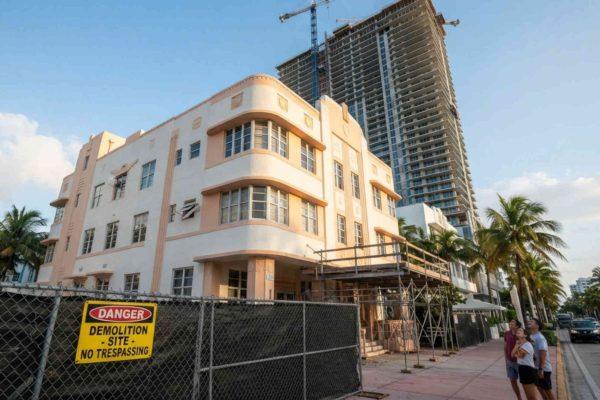
The Savoy Hotel, a 1937 Art Deco gem on Ocean Drive, is on the brink of demolition. A developer wants to replace it with a 38-story condominium tower at 455 Ocean Drive, and new state laws have stripped Miami Beach of its usual defenses. Residents and city officials are watching in disbelief as the building that has defined the neighborhood's skyline for nearly a century faces an uncertain fate.
The controversy isn't just about one building. It's about who gets to decide what Miami Beach looks like. For decades, local zoning and historic preservation rules kept development in check. But recent legislation from Tallahassee has changed the game, allowing developers to bypass height and density restrictions in coastal areas. The Savoy, which doesn't meet modern flood standards, is now vulnerable under a state law that permits demolition of structures that fail to comply with federal resiliency guidelines.
State overreach vs. local control
Miami Beach's Art Deco district is one of the most photographed and visited spots in Florida. Its pastel facades and neon signs are a testament to a bygone era. The Savoy, with its sleek lines and porthole windows, is a prime example of the style that made the area famous. But state lawmakers argue that coastal infrastructure must adapt to climate change and housing shortages. They see old buildings as obstacles, not treasures.
Local commissioners and preservation groups see it differently. They say the new laws are a giveaway to developers, a way to sidestep the will of the people who live and vote in Miami Beach. "This is about more than one hotel," said a spokesperson for the Miami Design Preservation League. "If the Savoy falls, dozens of other historic properties could be next. The character of our city is at stake."
The tension between state and local authority is not new, but it has rarely been this stark. In the past, cities like Miami Beach could negotiate with developers, offering density bonuses in exchange for preserving facades or adding public amenities. Now, those tools are gone. The state has effectively preempted local zoning, and the city is left with little more than a plea.
Residents have taken to the streets, and social media is buzzing with photos of the Savoy under the hashtag #SaveTheSavoy. The debate has also drawn attention from beyond Florida, as other coastal cities watch to see how this plays out. If Miami Beach loses, it could set a precedent for the rest of the country.
Meanwhile, the developer, who has not been named publicly, is moving forward with plans. The tower would include luxury condos, ground-floor retail, and underground parking. Proponents say it would bring much-needed housing and modern amenities to the area. They also point out that the Savoy, like many old buildings, is not energy-efficient and may not withstand the next big hurricane.
But critics argue that the tower would cast a shadow over the beach and block ocean views for neighboring properties. They also question the need for more luxury housing in a city that already has plenty. "This isn't about housing people," said a local activist. "It's about making money off prime real estate."
The political battle has reached the state capitol, where lawmakers are defending their legislation. They argue that local governments have been too restrictive, driving up housing costs and preventing necessary development. They also point to the need to adapt to rising sea levels, which threaten low-lying areas like Miami Beach.
For now, the Savoy's fate rests in the courts. A lawsuit filed by the city seeks to block the demolition, arguing that the state laws violate the city's home rule authority. Legal experts are divided on the outcome, but the case could take years to resolve. In the meantime, the Savoy remains open, its neon sign still glowing, a symbol of a city at a crossroads.
This story is part of a larger trend along the Florida coast, where historic buildings are being replaced by modern towers. Miami's plan to revive Calle Ocho shows that preservation can coexist with development, but only when local voices are heard. The Savoy's fate will be a test of whether that balance can be maintained.
As the debate rages on, one thing is clear: the Savoy Hotel is more than just a building. It's a piece of Miami Beach's soul. And its loss would be felt far beyond the city limits.