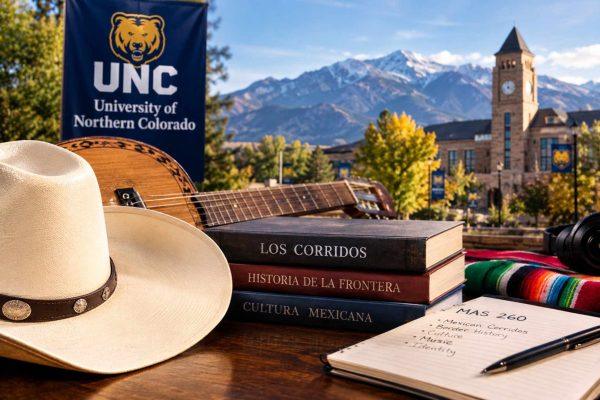
Mexican corridos have long told the stories of border communities, capturing struggles, migrations, and everyday life in song. Now, they're getting a formal place in higher education. The University of Northern Colorado (UNC) in Greeley has introduced a new course, MAS 260, titled “Corridos: Music, Identity, Cultural Expressions, and Social Narratives at the Border.” It's a three-credit class offered through the Mexican American Studies program, and it treats these narrative ballads as more than just music—they're historical documents.
Music as a living archive
Professor Jonathan Alcantar, who leads the course, sees corridos as a way to understand the past from the ground up. Instead of relying only on textbooks, students analyze songs that have chronicled everything from immigration policies to social conflicts along the U.S.-México border. These compositions offer a perspective that mainstream history often overlooks, giving voice to marginalized communities and preserving collective memory.
“Corridos are not just entertainment,” Alcantar said in a statement. “They're a record of what people lived through, what they feared, and what they hoped for.” The course encourages students to think critically about how these songs challenge official narratives and highlight resilience.
Bridging high school and college
What makes MAS 260 stand out is its dual audience. While it's designed for college undergraduates, the university is also inviting local high school students to join the lectures. This gives younger scholars a chance to earn college credit while getting a taste of university-level coursework. It's a smart way to build connections with the local Hispanic community and make higher education feel more accessible.
For Greeley, a city with a significant Latino population, this initiative resonates deeply. It's not just about studying music; it's about validating the experiences of families who have lived those stories. The course builds on earlier efforts by Alcantar, who previously taught about narcocorridos and contemporary popular culture. But this new iteration focuses more on connecting academic research with the lived realities of borderland communities.
A growing recognition of regional Mexican music
The move comes as regional Mexican genres continue to dominate streaming platforms worldwide. From Carín León's recent hits to the global rise of corridos tumbados, the music's cultural footprint is undeniable. By bringing corridos into the classroom, UNC is acknowledging that these songs matter—not just as entertainment, but as a vital part of Mexican-American heritage.
This trend isn't isolated. Across the U.S., universities are diversifying their humanities curricula to include more Latino voices. Courses like MAS 260 help ensure that oral traditions aren't lost or dismissed. They also offer students a chance to see themselves reflected in what they study, which can be transformative.
For those who grew up hearing corridos at family gatherings or community events, this course might feel like a validation. For others, it's an introduction to a rich musical tradition that has shaped border culture for generations. Either way, it's a step toward preserving and critically examining the stories that have long been told through song.
As the course unfolds, it will be interesting to see how students respond. Will they see corridos differently after analyzing them in an academic setting? Will they connect the lyrics to broader historical patterns? Alcantar hopes so. “We're not just teaching music,” he said. “We're teaching history, identity, and the power of storytelling.”
For anyone interested in the intersection of music and culture, this is a promising development. It's a reminder that the sounds we love often carry deeper meanings—and that universities are finally starting to take notice.