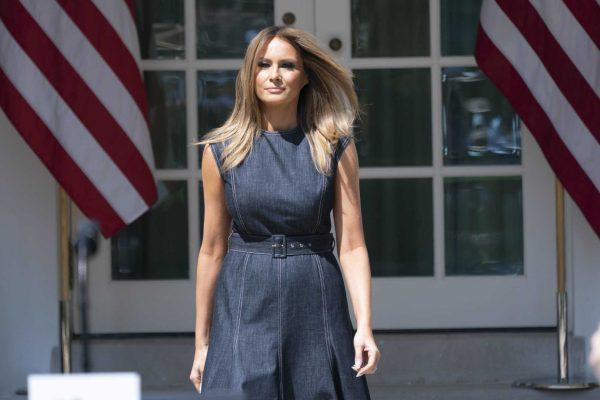
In an unexpected move that has sent ripples through Washington, Melania Trump has broken her silence on the Jeffrey Epstein case. The First Lady categorically denied any connection to the disgraced financier’s network and called on Congress to hold hearings where survivors can place their testimonies on the official record. The statement, delivered without prior notice to the President’s office, marks a rare public intervention from the typically reserved First Lady.
Melania Trump addressed rumors that Epstein or his associate Ghislaine Maxwell introduced her to Donald Trump, labeling them as “defamation.” She clarified that her only encounter with Epstein was a brief meeting in the year 2000, and that a 2002 email to “G” (Maxwell) was merely a polite, casual correspondence. The First Lady also threatened legal action against author Michael Wolff for suggesting a modeling agent linked to Epstein facilitated her introduction to her husband.
This public stance has reignited a national conversation about justice for Epstein’s victims. While some survivors and Democratic representatives, like Robert Garcia, have welcomed the call for hearings, others remain skeptical. Lisa Phillips, one of the survivors, questioned whether this is a genuine step toward justice or a political performance. Some victims have expressed concerns about public testimony, fearing retaliation, and have suggested private hearings might be more effective.
The White House initially stated it was unaware of the content of Melania Trump’s declaration before it was made. The move has put pressure on the Department of Justice to act with transparency, especially as relatives of other victims accuse the current administration of protecting powerful individuals by failing to release the full Epstein files.
A Political Earthquake in Washington
The First Lady’s statement has reactivated a debate that many hoped would fade. For the Latino community, which often watches U.S. politics from a bicultural perspective, this story underscores the complexities of power and accountability. As middle-class families in California face their own financial squeezes, the contrast between elite scandals and everyday struggles is stark.
Melania Trump’s demand for Congressional hearings could set a precedent for how survivors of high-profile abuse cases are heard. However, the path forward remains uncertain. The Oversight Committee will need to balance the need for transparency with the safety and privacy of those who come forward.
For now, the First Lady’s words have broken her usual silence, but whether they lead to concrete action or remain a political gesture is yet to be seen. As the debate unfolds, the Latino World News will continue to follow how this story impacts communities across the Americas and the diaspora.