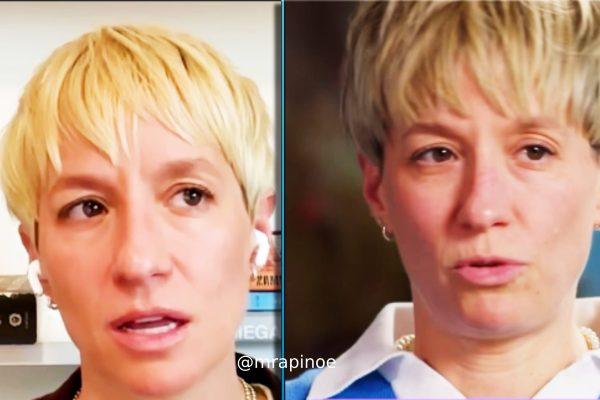
Megan Rapinoe has never been one to separate sports from politics, and after the U.S. Men's National Team's early exit from the 2026 World Cup, she's pointing directly at the White House. The former USWNT star used her platform to argue that President Donald Trump's public pressure on FIFA to overturn Folarin Balogun's red-card suspension turned a routine disciplinary matter into a full-blown distraction that undermined the team's performance.
Speaking during a broadcast segment, Rapinoe laid out a clear timeline: Balogun was sidelined after a red card against Bosnia and Herzegovina in the Round of 16. Then Trump called FIFA president Gianni Infantino, and suddenly the suspension was lifted. The decision sparked outrage—especially in Belgium, where fans and players saw it as political favoritism. For Rapinoe, the damage wasn't just diplomatic; it was tactical.
“It created an environment where the team couldn't focus on what mattered,” Rapinoe said. “You have players answering questions about the president instead of about Belgium's press. That's not how you win knockout games.”
From Political Pressure to Tactical Chaos
The fallout was immediate. When the USMNT faced Belgium in Seattle, the scoreline told a brutal story: 4-1. But the subtext was even worse. Belgian players, led by veteran striker Romelu Lukaku, celebrated their fourth goal by mimicking Trump's signature dance moves—a taunt that Belgium's official social media channels later amplified. It was a clear message: the political noise had become a weapon.
Rapinoe didn't claim that Trump's call directly caused the defensive lapses. Instead, she argued that the controversy disrupted the team's mental preparation and load management protocols. “When you're dealing with that level of external noise, your focus fractures,” she said. “And against a team like Belgium, you can't afford even a second of distraction.”
The match itself was a clinic in how to exploit chaos. Belgium's midfield carved through the U.S. defense with precision, while the American attack, despite Balogun's presence, never found rhythm. Captain Christian Pulisic admitted afterward that the team's performance “just wasn't good enough,” but Rapinoe's analysis digs deeper: the structural distraction made it nearly impossible to execute coach Mauricio Pochettino's game plan.
For Latino fans watching across the Americas, the episode raises uncomfortable questions about how political power can warp sporting integrity. From Buenos Aires to Mexico City, the World Cup is sacred ground—a space where merit should decide outcomes, not phone calls from heads of state. Rapinoe's critique resonates beyond U.S. borders because it touches on a universal tension: the line between sport and politics is often blurred, but when it's blurred by a president, the consequences can be devastating.
The Belgium rout exposed more than just defensive fragility; it revealed a team that had lost its composure before the first whistle. Rapinoe's analysis is a reminder that in high-stakes tournaments, the margin for error is razor-thin—and that margin can be erased by forces far beyond the pitch.
As the USMNT heads into a period of reflection, the question remains: will the federation learn from this, or will political interference continue to haunt the program? For now, Rapinoe has made sure the conversation won't be silenced.