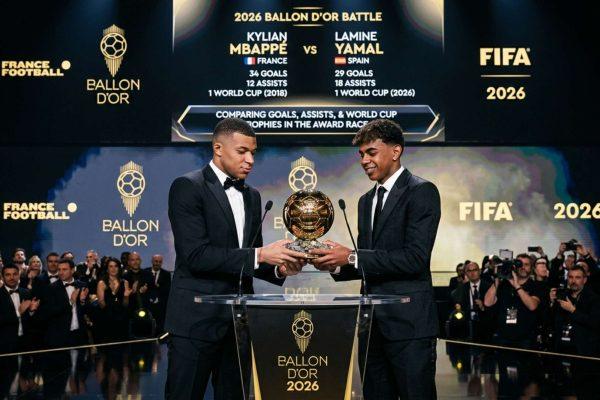
The 2026 Ballon d'Or race has turned into one of the most compelling debates in modern football. On one side, Real Madrid's Kylian Mbappé has delivered a season defined by relentless scoring. On the other, FC Barcelona's Lamine Yamal has reshaped how we think about attacking influence, blending goals with playmaking that touches every phase of his team's offense.
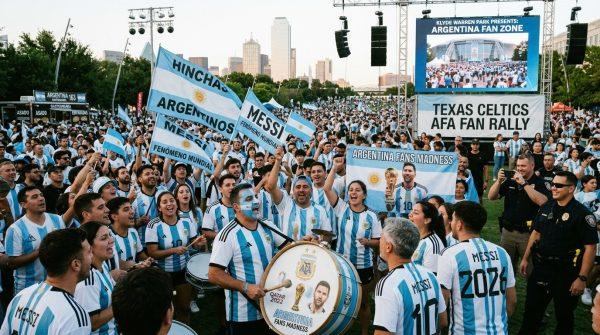
For fans across Latin America and the diaspora, this isn't just a European story. Both players have deep ties to the region's football culture—Mbappé's rise has been shadowed by comparisons to the greats, while Yamal's Barcelona lineage echoes the club's historic connection to Latin American stars. The debate resonates from Buenos Aires to Guadalajara, where the Ballon d'Or is more than a trophy; it's a statement of style.
Mbappé's goal-scoring masterclass
At 27, Mbappé is at the peak of his powers. He finished the 2025/26 season with 42 goals in 44 appearances across all competitions, including 25 in LaLiga and 15 in the UEFA Champions League. His crowning achievement came at the 2026 FIFA World Cup, where he netted 10 goals to claim the Golden Boot and set the all-time World Cup scoring record.
His numbers are staggering, but they tell only part of the story. Mbappé's pace, finishing, and ability to decide matches single-handedly have made him the benchmark for modern strikers. As Real Madrid's wage structure reflects, he's the centerpiece of a billion-euro locker room, and his performances justify that investment.
Yamal's creative genius
Lamine Yamal offers a different argument. The 19-year-old winger doesn't match Mbappé's goal tally, but his 24 goals and 18 assists this season are world-class. In LaLiga alone, he recorded 16 goals and 11 assists, consistently drawing defenders, breaking down low blocks, and unlocking lines with precise passing.
His influence goes beyond numbers. Yamal's dribbling, vision, and ability to create space for teammates make him a more versatile attacking anchor. As Barcelona's wage bill shows, the club is betting its future on him, and his early success—including a World Cup trophy with Spain before turning 20—has already built a legacy that rivals players a decade older.
The World Cup as the deciding factor
The 2026 World Cup in North America was always going to be the tiebreaker. Mbappé had an unmatched individual tournament statistically, but France fell to Spain in the semifinals. Yamal, meanwhile, was central to Spain's run, providing the creative spark that carried them to glory.
That contrast—individual brilliance versus collective triumph—is at the heart of the voters' dilemma. Some will argue that Mbappé's 10 goals in a single World Cup are unprecedented and deserve the highest honor. Others will point to Yamal's role in lifting the trophy, a feat that resonates with the record valuations that followed the tournament.
For Latino fans, the debate also touches on identity. Mbappé's power and precision evoke the classic number nine, while Yamal's flair and creativity recall the enganche tradition of South American playmakers. It's a clash of football philosophies that transcends borders.
As the voting deadline approaches, the question remains: do you reward the scorer or the creator? Mbappé has the goals, but Yamal has something that could decide the 2026 Ballon d'Or—a World Cup winner's medal and the intangibles that stats can't fully capture.