The 2026 World Cup didn't just crown a champion — it rewrote the financial landscape of global football. Transfermarkt's latest valuation update, released after the tournament, shows how a few weeks of high-stakes competition can accelerate careers and reshape club balance sheets across Europe.
At the top of the market, two names stand alone: Lamine Yamal and Erling Haaland, both now valued at an unprecedented €220 million. But the story goes deeper than the summit. From breakout teenagers to established stars, the World Cup served as a career-defining platform for a diverse group of players — including several with ties to Latin American football and the diaspora.
Yamal and Haaland: the new global standard
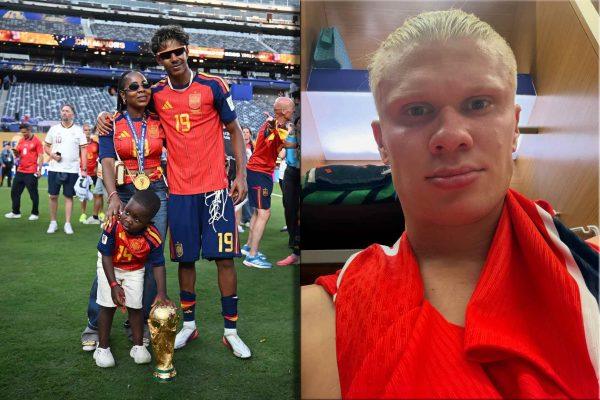
Lamine Yamal, just 19 years old, cemented his place among the sport's elite by leading Spain to the world title. His performances — decisive goals, pinpoint assists, and relentless wing play — earned him a €20 million bump, pushing his valuation to €220 million. The Barcelona prodigy is now seen as a generational cornerstone, capable of driving both on-field success and commercial value for years to come. For more on his journey, check out the influencer behind his World Cup run.
Erling Haaland matched Yamal's valuation after a historic tournament with Norway. The Manchester City striker scored seven goals, including a crucial brace that knocked out Brazil in the round of 16. His €30 million increase — the largest absolute jump among the top tier — proves that his elite finishing translates seamlessly to the international stage, regardless of tactical constraints. Haaland's rise has already sparked transfer rumors; Real Madrid is reportedly eyeing him as a post-World Cup target.
Emerging talents and market leaps
Beyond the headline duo, the tournament elevated a wave of emerging talents. English midfielder Elliot Anderson topped the growth charts with a €35 million increase following his transfer to Manchester City and a strong third-place finish with England, reaching €110 million. Moroccan sensation Ayyoub Bouaddi surged to €90 million after a dominant display in midfield.
Defensively, Spain's Pau Cubarsí reached €100 million, matching Arsenal's William Saliba as the world's most valuable defender. Jude Bellingham climbed to €160 million, while Kylian Mbappé, Michael Olise, Bradley Barcola, and Morgan Rogers also saw significant increases. For a broader look at the tournament's defining figures, see our full list of players who shaped the World Cup.
Latin American impact and diaspora stories
While no Latin American team reached the semifinals, the region's influence was felt across the tournament. Brazil's early exit at the hands of Haaland's Norway was a shock, but individual players like Vinícius Júnior and Rodrygo still commanded attention. Meanwhile, Gilberto Mora of Mexico saw his market value hit $29.5 million after the World Cup, topping Liga MX history — a story we covered in detail here.
The diaspora also made its mark. Players of Latin American heritage representing European nations — like Spain's Yamal (of Moroccan and Equatorial Guinean descent) and France's Michael Olise (with Nigerian and French roots) — highlighted the globalized nature of modern football. Their success underscores how the World Cup continues to serve as a platform for multicultural talent.
The World Cup as the ultimate benchmark
The 2026 World Cup reaffirmed its role as the ultimate benchmark for player valuation. Performing under intense global pressure doesn't just earn silverware — it fundamentally alters squad values and negotiation leverage for top-tier European clubs. For these ten athletes, the tournament provided a career-defining leap, securing their status as the primary financial and sporting assets shaping the future of competitive football.
As clubs now adjust their transfer strategies, one thing is clear: the World Cup's impact on the market is as powerful as ever, and the next generation of stars is already cashing in.