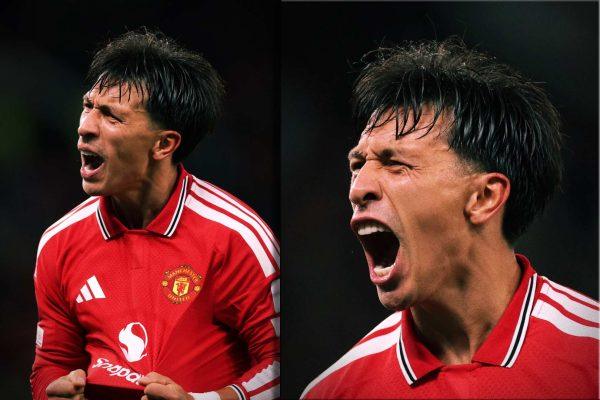
Manchester United's internal tensions spilled into the open this week when Argentine defender Lisandro Martínez was fined by the club for publicly criticizing the board's transfer strategy. The incident follows a disappointing Champions League defeat to Atlético de Madrid, a match that exposed the squad's lack of depth and reignited debates about the club's direction under its current leadership.
Martínez, known for his fierce competitiveness and leadership on the pitch, did not hold back after the loss. In post-match comments, he questioned the club's recruitment approach, suggesting that without greater investment, United would struggle to compete at the highest level of European football. His words struck a nerve among fans who share his frustration, but they also crossed a line for the club's executives.
Disciplinary action and a public apology
According to reports, Martínez was summoned to a meeting with manager Michael Carrick and senior club officials to address his remarks. While the meeting allowed the defender to explain his frustrations, the club decided that public criticism of its strategy warranted a formal penalty. A significant fine was issued, and the case is now considered closed by the club.
In a subsequent statement, Martínez expressed regret over the timing of his comments, acknowledging that the heat of the moment after the match influenced his words. He apologized to the coaching staff, his teammates, and the club's supporters, emphasizing his commitment to the team's goals for the season.
The incident highlights the delicate balance between player passion and organizational discipline. Martínez is not the first player to voice frustration over transfer policy, but his public outburst forced the club to assert its authority. For a squad already under pressure, the episode adds another layer of complexity to an already challenging campaign.
Barcelona monitoring the situation
Beyond the immediate disciplinary fallout, the controversy has drawn attention to Martínez's contractual situation. His current deal runs until June 2027, but negotiations over an extension have reportedly stalled. That has put European clubs on alert, with FC Barcelona particularly interested in the left-footed defender as a potential reinforcement for their backline.
Barcelona's interest is not new, but the uncertainty surrounding Martínez's future at Old Trafford could open the door for a move. The Catalan club has been looking for defensive options that fit both their tactical needs and financial constraints, and a player of Martínez's quality would be an attractive prospect—especially if he becomes available at a reduced fee.
For Manchester United, the situation is delicate. Losing a player of Martínez's caliber would be a significant blow, both on the pitch and in terms of squad morale. The club's recent failed bid for Fermín López shows that they are willing to spend, but the board's decisions have not always aligned with the manager's wishes.
As the season progresses, all eyes will be on how United manages this internal friction. The club has a history of navigating such challenges, but the stakes are high. With the Premier League campaign heating up and European ambitions still alive, Martínez's focus will be on the pitch. But his future at the club remains an open question.
For now, the fine and apology may have smoothed things over, but the underlying issues—transfer strategy, squad depth, and the balance of power between players and executives—remain unresolved. As United looks to rebuild and compete, the lessons from this episode could shape their approach in the coming windows.
For Latino fans, Martínez's situation resonates beyond the pitch. He is one of several Argentine players carrying the weight of expectations at top European clubs, and his willingness to speak out reflects a broader cultural trait of directness and passion. But in the corporate world of modern football, that passion can sometimes come with a price.