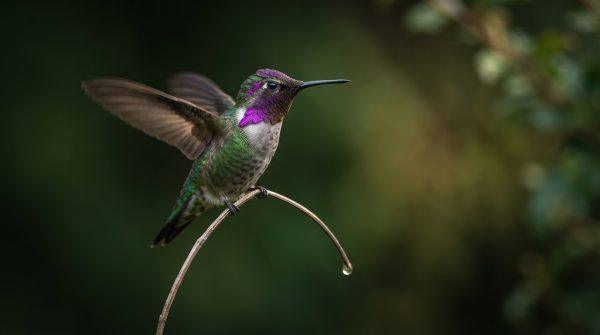
Every September, the small Texas city of Lake Jackson, about an hour south of Houston, turns into a crucial pit stop for thousands of hummingbirds. These tiny travelers—some weighing no more than a U.S. penny—are making an exhausting journey from their breeding grounds in Canada and the northern United States down to Central America, where they’ll spend the winter.
The Gulf Coast Bird Observatory, a scientific and conservation group based in the area, has turned this natural phenomenon into a community celebration. On two Saturdays this month—September 12 and 19—the organization hosts the Xtreme Hummingbird Xtravaganza, a festival that draws bird lovers from across the region. Gates open at 8 a.m., admission is $5 for adults, and kids under 12 get in free.
A tiny bird with an incredible memory
What makes Lake Jackson so special is its location along the Gulf Coast, a natural corridor for migratory birds. The protected wetlands and gardens at the observatory offer a safe place to rest and refuel before the birds push on across the Gulf of Mexico. Researchers have found that hummingbirds return to the exact same feeders and flowers year after year, a remarkable display of memory for a creature with a brain the size of a sesame seed.
During the festival, scientists run a live banding program. They set up fine nets, gently capture the birds, then measure, weigh, and fit them with tiny metal bands. Each band is so light that it takes about 5,500 of them to equal a single ounce. The data helps track population health and migration patterns over time.
“These birds are a reminder that what happens in our backyards connects to a much larger story,” says one of the observatory’s lead biologists. “Protecting a patch of native plants here can make a difference for a bird that will fly thousands of miles.”
For Latino families in Texas and beyond, the hummingbird migration has a special resonance. Many of these birds are heading to Mexico and Central America—places our own families know well. The same skies that carry our memories of abuelas’ gardens also carry these tiny travelers south each fall.
More than a festival: conservation in action
The Xtravaganza isn’t just about watching birds. Organizers set up educational booths where kids can learn about pollinators, and families can buy native plants to create their own backyard habitats. There’s also a gift shop with nature books and souvenirs, and visitors can symbolically adopt a bird to help fund land preservation efforts.
All proceeds go toward ongoing conservation projects in Brazoria County and along the Texas coast. The observatory works with local landowners and schools to protect critical habitats, and they host volunteer days throughout the year.
If you’re coming from Houston, it’s an easy drive—about an hour depending on traffic. The festival is a chance to see science in action, but it’s also a moment to slow down and appreciate the natural world that exists right alongside our busy cities. As the birds continue their journey south, they carry with them the hope that these fragile ecosystems will remain protected for generations to come.