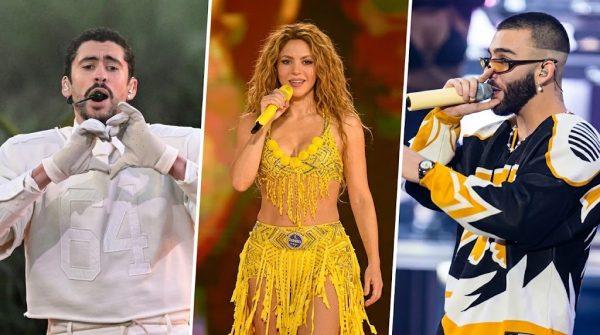
When the NFL announced that Manuel Turizo would headline the halftime show for the first regular-season game in Madrid, it wasn't just a booking—it was a statement. The Colombian singer, known for hits like "La Bachata" and "Déjala que vuelva," will perform on November 8 at the Santiago Bernabéu, where the Cincinnati Bengals face the Atlanta Falcons. It's a move that underscores a broader trend: Latino artists have become the secret weapon behind the world's biggest sporting events.
The numbers tell the story. Over the past decade, Latin music streaming on Spotify has grown by an astonishing 2,500%, and its share of global streams has jumped from 8% to 27%. This isn't just a playlist phenomenon—it's a demographic shift. Sports executives, armed with digital analytics, see that younger, bicultural audiences are driving the culture. And they're responding by putting Latino stars at the center of their biggest broadcasts.
From guest spots to headliners
The evolution has been rapid. In 2020, Shakira and Jennifer Lopez co-headlined the Super Bowl halftime show in Miami, with guest appearances from Bad Bunny and J Balvin. That performance was a watershed moment, proving that Spanish-language music could command the biggest stage in American sports. Since then, the trajectory has only accelerated.
Bad Bunny, the Puerto Rican trailblazer, went from guest to headliner at the 2026 Super Bowl, delivering a set entirely in Spanish. He dedicated the performance to his roots, saying, "This is for my people, my culture and our history." League executives praised him for uniting diverse audiences, and the moment was hailed as a breakthrough for linguistic inclusivity in mainstream entertainment.
Shakira, meanwhile, has become a fixture at global sports events. She headlined the opening ceremony of the 2026 FIFA World Cup in Mexico City, performing the official anthem "Dai Dai" alongside Burna Boy. And in a historic first, she performed during the halftime show of the World Cup final between Spain and Argentina at MetLife Stadium in East Rutherford, New Jersey. These appearances aren't just cameos—they're strategic partnerships that bridge cultures and generations.
Why sports leagues are betting on Latin music
The NFL's international expansion is a case in point. In 2026, the league organized seven halftime shows across seven countries and four continents, its largest musical programming outside the U.S. to date. In Rio de Janeiro, Ricky Martin and Pedro Sampaio brought the energy; in Madrid, Manuel Turizo will do the same. The league is deliberately seeking artists who can connect with local audiences while also resonating with a global viewership.
"We are going to have a great time with many surprises for the fans," Turizo promised, building on his performance at the 2026 Miami F1 Grand Prix. His presence in Madrid is a testament to the power of authentic local partnerships. As the NFL pushes into new markets, culturally resonant acts are essential for building brand loyalty.
This strategy extends beyond football. The recent El Clásico in Barcelona, for instance, drew global attention not just for the football but for the cultural moments surrounding it. And it's not just about the game itself—it's about the spectacle. High-energy performances generate viral social media moments that circulate long after the final whistle, extending the event's reach.
Spotify data confirms the commercial power: Bad Bunny was the most streamed artist worldwide in 2025, with 19.8 billion plays. That kind of pull is impossible for sports executives to ignore. By aligning with Latino superstars, they tap into a vast, engaged audience that might otherwise skip the game.
For Latino audiences, this visibility is a source of pride. It validates the cultural power of Spanish-language music and opens doors for the next generation of artists. As Becky G's journey shows, identity can be a strength, not a hurdle. And as Aria Vega's story illustrates, the spotlight on Latino talent is only growing.
In the end, the rise of Latino superstars in sports entertainment is not a fad—it's a reflection of a cultural shift. As streaming data and demographic trends converge, expect to see more Spanish-language anthems at halftime shows, more Latin flags in the stands, and more moments that make us feel seen. That's the real victory.