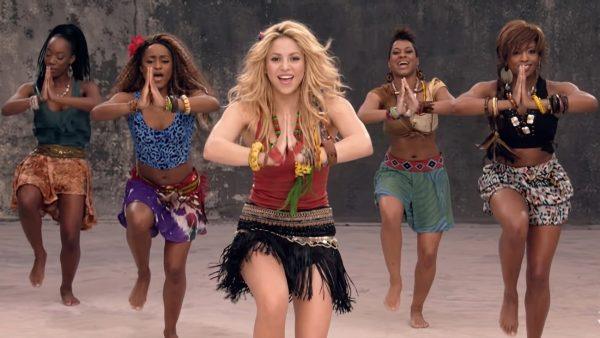
When Shakira released "Waka Waka (This Time for Africa)" as the official song of the 2010 FIFA World Cup in South Africa, she created more than just a catchy tune. The track became a global phenomenon, but its most memorable lines carry a history that stretches back decades and across the Atlantic to Central Africa.
The chorus that millions have sung — "Tsamina mina, eh eh" — didn't originate in a studio. It comes from a military chant used by Cameroonian soldiers during World War II. The phrase is rooted in the Fang language, spoken in Cameroon, Equatorial Guinea, and Gabon. "Waka Waka" itself translates roughly to "do it" or "you can do it," a motivational call that fits perfectly with the spirit of athletic competition.
From battlefield to dance floor
The specific line "Tsamina mina zangalewa" means something like "Where do you come from?" and was used by troops to question each other during long marches. What began as a way to keep morale high in wartime eventually became part of African folk music. In 1986, the Cameroonian group Golden Sounds (later known as Zangalewa) turned the chant into a hit across the continent under the title "Zangalewa."
Shakira, born in Barranquilla, Colombia, took these elements and wove them into a message of global unity. The official video for "Waka Waka" has surpassed 3 billion views on YouTube, and the song remains a staple of her Las Mujeres Ya No Lloran World Tour, proving its staying power.
This deep connection with African culture wasn't a one-off. Shakira is now preparing to release "Dai Dai," her collaboration with Nigerian Afrobeat star Burna Boy, as the official anthem for the 2026 World Cup, which will be hosted by the United States, Mexico, and Canada. The track is already generating buzz, and it shows how the Colombian artist continues to draw from diverse musical traditions.
Understanding the military and resilient origins of "Waka Waka" helps explain why Shakira's music resonates so strongly across continents. She doesn't just borrow sounds — she honors their roots and transforms them into something that speaks to a global audience without erasing their history.
For those who grew up hearing "Waka Waka" at every World Cup gathering, knowing that the chorus was once a soldier's chant adds a layer of depth to a song that already felt larger than life. It's a reminder that the most powerful anthems often come from the most human experiences: struggle, perseverance, and the need to keep moving forward.
As Shakira gears up for another World Cup moment with "Dai Dai", the legacy of "Waka Waka" stands as the gold standard for sporting anthems. It's a song that brought the world together while staying true to its African and Latin American roots — a balance that few artists manage to strike.