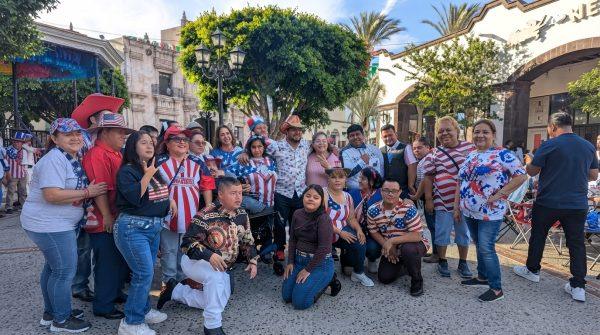
On any given Saturday, the walkways of Plaza México in Lynwood, California, echo with the sounds of cumbias and romantic ballads. But this is not just a casual shopping center soundtrack. It is the heartbeat of Sueños y Esperanza, a community organization that has spent over a decade bringing together more than 100 families each week to celebrate music, dance, and above all, inclusion.
For many young adults with developmental conditions, the end of high school marks a sudden loss of structure and social connection. Public programs often fall short, leaving families to navigate a fragmented system on their own. In response, Latino parents in California have taken matters into their own hands, building the kind of supportive network they once struggled to find.
From karaoke to confidence
What started as a small gathering has grown into a weekly ritual. At Plaza México, participants take the makeshift stage to sing their favorite songs, dance with abandon, and showcase talents that might otherwise go unnoticed. The transformation is visible: young people who once hesitated at the edge of the crowd now command the floor with confidence.
“Here, nobody judges you,” says one parent, who asked to remain anonymous. “My son used to be so shy. Now he’s the first one up to sing.”
That shift from shyness to self-assurance is no accident. Organizers design every activity—karaoke, dance, sports, and art—to build independence and social skills. The goal is not just to pass the time but to nurture genuine personal growth.
Parents, too, find solace in these gatherings. They exchange stories, share advice, and form friendships that ease the emotional weight of caregiving. In a state where housing costs strain many Latino households, this kind of mutual support is invaluable.
Filling the gaps left by institutions
The need for such grassroots efforts is clear. After age 22, many young adults with special needs lose access to school-based services, and adult programs are often scarce or expensive. Sueños y Esperanza steps into that void, offering a free, welcoming space where families can simply be themselves.
Research supports what these families already know: consistent social interaction reduces anxiety and isolation. The National Down Syndrome Society and the American Psychological Association have both highlighted the mental health benefits of community connection. For attendees, the proof is in the laughter and friendship that fill the plaza each week.
“This is our second home,” says María, a mother from Compton who has been coming for three years. “We found a family here.”
The impact extends beyond the weekend. Parents report that their children are more confident at home and in part-time jobs. Some have even formed bands or joined local theater groups, carrying the skills they learned at Plaza México into the wider world.
A model for the region
Local institutions have taken notice. Community leaders and health officials recognize that groups like Sueños y Esperanza are bridging a critical gap in public services. They offer a blueprint for how neighborhoods can support their most vulnerable members—not through bureaucracy, but through shared culture and genuine care.
As California grapples with affordable housing challenges and other pressing issues, the resilience of communities like Lynwood offers a reminder that some of the most effective solutions come from the ground up.
For the families of Sueños y Esperanza, the weekly gathering is more than a social event. It is a declaration that their children deserve joy, dignity, and a place to belong. And in the rhythm of a cumbia or the warmth of a shared embrace, they find exactly that.
If you’re in the area, the organizers extend an open invitation. Come listen, dance, or just sit and watch. You might just find your own second home.