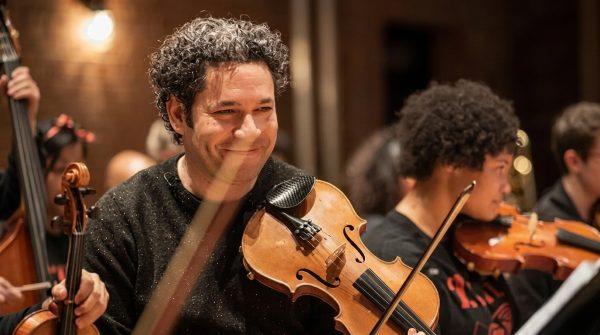
When Gustavo Dudamel took the podium at Radio City Music Hall on September 10, it wasn't just another concert. It was the official start of his tenure as music and artistic director of the New York Philharmonic, a role that places him at the helm of one of the world's most storied orchestras. But for the 45-year-old Venezuelan maestro, the real work extends far beyond the glittering halls of Lincoln Center. His mission in New York is as much about social transformation as it is about symphonic excellence.
Dudamel's vision is rooted in a philosophy he has championed for decades: that music is a fundamental human right, not a privilege for the few. In New York, that belief is taking shape through community-driven initiatives like UpBeat NYC in the South Bronx, a program that offers free instrumental training to over 230 children and young adults, no auditions required. It's a model that echoes Venezuela's El Sistema, the national youth orchestra network that nurtured Dudamel himself, and it's now finding fertile ground in the boroughs.
Beyond the Concert Hall: A Pedagogy of Inclusion
The approach is as practical as it is inspirational. UpBeat NYC, founded in 2009, provides instruments on free loan, eliminating the financial barriers that often keep kids from pursuing music. The curriculum is carefully staged: at age five, children start with the Paper Orchestra, learning rhythm through handmade paper instruments. By six, they're holding real violins and cellos, guided by professional faculty in both individual and group sessions. For older students, the program offers paid apprenticeships as assistant instructors or instrument repair technicians, turning a passion into a viable career path.
Carlos Sánchez, the program's coordinator, emphasizes that the goal is more than musical proficiency. "We're building a community where collective music-making becomes a vehicle for social inclusion," he says. "The discipline of daily practice, the support of family services, the safety of a creative space—these are the real outcomes."
This holistic model is a direct response to the challenges facing vulnerable youth in urban environments. By combining intensive musical instruction with food assistance and employment opportunities, the program offers a sustainable alternative to the streets. It's a vision that Dudamel has long championed, and one he's now bringing to the forefront of the New York Philharmonic's outreach efforts.
The Philharmonic's commitment extends to neighborhoods often described as artistic deserts—places like Washington Heights, Corona, Canarsie, and the South Bronx. These are communities rich in culture but historically underserved by major cultural institutions. Dudamel's presence changes that calculus, signaling that the orchestra's future is tied to the city's diverse fabric.
This local focus is paired with a global ambition. The Philharmonic is set to embark on a major European tour, bringing its refreshed artistic identity to audiences in Paris, Barcelona, Madrid, Berlin, Hamburg, and Vienna. It's a balancing act that Dudamel navigates with ease, having spent 17 transformative seasons with the Los Angeles Philharmonic, where he expanded the cultural footprint of the Hollywood Bowl and Walt Disney Concert Hall, and founded Youth Orchestra Los Angeles (YOLA).
His track record includes multiple Grammy Awards, acclaimed opera productions, and even a Super Bowl appearance. But for Dudamel, these accolades are secondary to the deeper purpose. "Art is a fundamental human right," he has said, "designed to uplift the spirit and foster social equity." That conviction is now shaping a new chapter in New York, one that promises to leave an indelible mark on the city's cultural landscape.
As Dudamel settles into his new role, the echoes of his work will be felt not just in the concert hall, but in the lives of young musicians across the boroughs. His legacy, it seems, will be measured not only by the notes played, but by the doors opened. For a city as diverse as New York, that's a mission worth applauding.
For more on how Latin American artists are reshaping cultural institutions, check out our piece on LGBTQ Latinos living authentically and the Venezuelan diaspora's impact on U.S. migration.