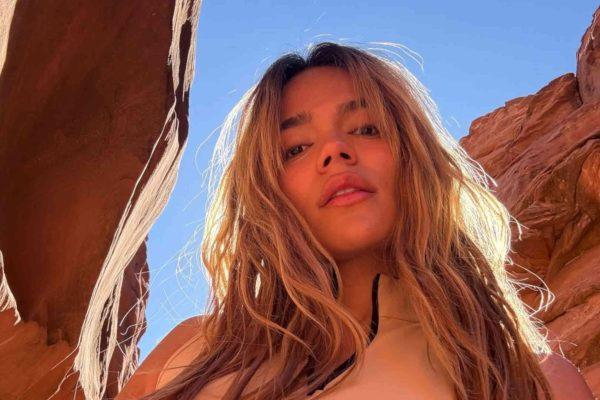
When a relationship ends, some people cut their hair. It’s often dismissed as a cliché, a dramatic gesture that doesn’t really change anything. But for Mexican actress and singer Gala Montes, shaving her head was more than a reaction to heartbreak—it was a way to take back control when everything else felt uncertain.
In a candid conversation with LatiNation, Montes opened up about the emotional journey that led her to cross the border for love, only to return with a broken heart. She spoke about the pain of rejection, the online criticism she faced over her appearance, and how she has turned those raw moments into music.
From heartbreak to reinvention
Montes, known for her roles in Mexican television and her growing music career, said the shaved head made her feel more like herself. But the look also drew cruel comments and assumptions from social media users. Instead of letting the criticism define her, she used it as fuel.
“I did it for love,” she said, recounting how she crossed the border in an attempt to reach someone she loved. The experience ended in rejection, and her return was complicated. But rather than letting the pain consume her, Montes channeled it into her art.
Her new album, a 13-track project, is a testament to that transformation. The songs explore themes of love, loss, and healing, drawing directly from her own experiences. It’s a deeply personal work that reflects her journey from childhood trauma and public judgment to a place of self-acceptance.
Montes’ story resonates with many in the Latino community who have faced similar crossroads—where love and identity intersect with borders, both physical and emotional. Her willingness to be vulnerable is a reminder that healing often starts with honesty.
For those who have followed her career, this new chapter marks a departure from the past. Montes is no longer just the actress from telenovelas; she is an artist who uses her voice to tell her own story, on her own terms.
In a world where celebrities often curate perfect images, Montes’ openness about her struggles is refreshing. She acknowledges that the pain doesn’t disappear, but it can be transformed into something meaningful.
Her story also echoes the experiences of other Latino artists who have turned heartbreak into art. From Carín León’s healing ballads to Arcángel’s candid moments with fans, the theme of love and loss is universal in Latin music.
Montes’ decision to share her story is a powerful reminder that reinvention is possible, even after the deepest disappointments. Her album is not just a collection of songs; it’s a declaration that she is moving forward, stronger than before.
As she continues to navigate her career, Montes is proving that vulnerability can be a strength. Her journey—from crossing borders for love to shaving her head and finding her voice—is one that will resonate with anyone who has ever had to rebuild themselves after a broken heart.