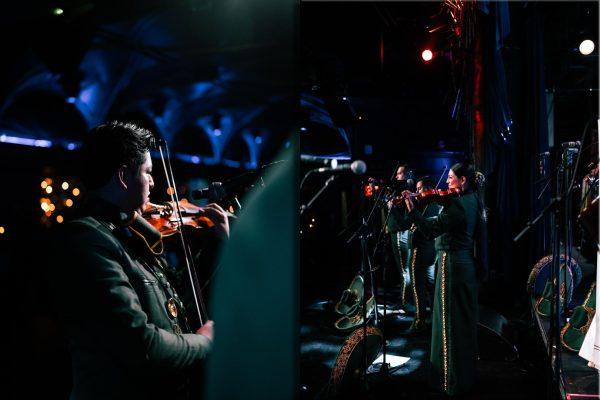
On a crisp September evening at Soldier Field, the Chicago Bears and Philadelphia Eagles were about to clash in a prime-time showdown. But before the first snap, the stadium lights dimmed, and a sound rarely heard on an NFL field filled the air: the bright, soulful strum of vihuelas and the soaring cry of trumpets. Mariachi Herencia de México, a young ensemble rooted in Chicago's vibrant Latino community, delivered a rendition of "The Star-Spangled Banner" that felt both reverent and revolutionary.
The performance, part of the league's Hispanic Heritage Month celebrations, marked a milestone for mariachi music and for the visibility of Mexican-American culture in mainstream American sports. As the group played, the crowd at Soldier Field rose to its feet, and millions watching the international broadcast witnessed a fusion of traditions that spoke to the changing face of America.
A cultural milestone on a national stage
Hispanic Heritage Month, observed from September 15 to October 15, honors the histories and contributions of Americans with roots in Mexico, Central and South America, the Caribbean, and Spain. By featuring a full mariachi ensemble during one of the most-watched weekly sports broadcasts in North America, the NFL underscored the growing influence of Latino culture in mainstream entertainment.
For many viewers, the image of mariachi musicians performing the U.S. anthem was a powerful symbol of unity—a reminder that American identity is not a monolith but a mosaic. The group's founder, Marco Antonio García, told reporters after the show, "We wanted to honor both our heritage and our country. This was for every kid who grew up dreaming of seeing their culture represented on a big stage."
The performance quickly went viral, with clips shared across social media platforms and praised by fans and critics alike. ESPN's Spanish-language broadcast highlighted the moment, and the hashtag #MariachiNFL trended for hours.
From Chicago's streets to the world
Mariachi Herencia de México is not your typical mariachi group. Founded in 2015 at a Chicago high school, the ensemble has become a beacon for young musicians, blending traditional Mexican sounds with contemporary energy. Their discography includes albums that have earned Grammy nominations, and they've toured internationally, but Monday night's performance was arguably their most visible moment yet.
"We grew up in Chicago, in neighborhoods where mariachi was part of the soundtrack of our lives," said violinist and vocalist Lucía Hernández. "To play at Soldier Field, in front of our families and the whole world, is something we never imagined."
The group's success is part of a broader wave of Latino artists making inroads into mainstream spaces. From Gustavo Dudamel's historic appointment to the record-breaking Premios Juventud, Latino culture is increasingly celebrated on its own terms.
More than pre-game entertainment
Performances like this are more than just a prelude to a football game. They are statements of inclusion, signaling to millions of Hispanic fans that they belong in these spaces. For young Latinos watching at home, seeing mariachi musicians on an NFL field can be transformative—a validation of their culture's worth.
The NFL has made efforts in recent years to engage Latino audiences, from Spanish-language broadcasts to cultural celebrations. Monday's anthem was a highlight of those efforts, and it resonated deeply. As one fan tweeted, "I've never felt more proud to be Mexican-American. This is what representation looks like."
Mariachi Herencia de México's performance also echoes the work of other Latino artists who have used their platforms to bridge cultures. Salma Hayek's playful Spanish banter on late-night TV and Shakira's global pop dominance are reminders that Latino culture is not a niche—it's a force.
As the final notes of the anthem faded and the Bears and Eagles took the field, the moment lingered. It was a reminder that sports, like music, have the power to bring people together. And for one night, a group of young musicians from Chicago showed the world that mariachi belongs on any stage—even the biggest one in American sports.