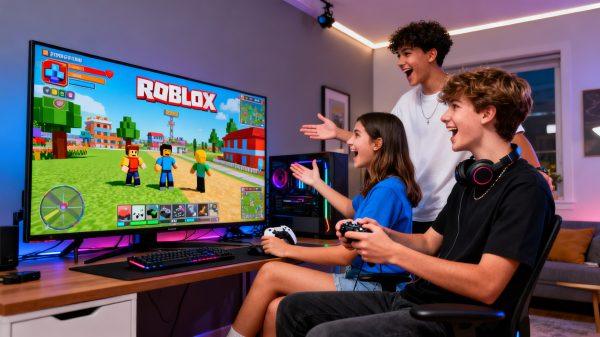
What we know today as Roblox—a digital universe where millions of kids build, trade, and socialize—didn't start in a Silicon Valley boardroom. It began in a classroom, with a physics teacher's observation that students weren't just running experiments; they were building their own worlds.
David Baszucki, a Canadian-born engineer with a knack for spotting patterns, founded Knowledge Revolution in 1989. The company made interactive physics simulators for schools. But Baszucki noticed something curious: students spent more time using the software to create their own contraptions than completing assigned labs. That spark—the urge to build for fun—would eventually become the foundation of a billion-dollar empire.
From Retirement to Reinvention
After selling Knowledge Revolution to MSC.Software in 1998, Baszucki stepped away from the tech world. But the idea of a collaborative, user-driven platform never left him. In 2004, he reunited with a small team—just four people—to launch a risky experiment: a virtual space where creativity, not competition, was the main draw.
That experiment became Roblox. In its early years, few understood the vision. But Baszucki saw what others missed: a perpetual motion machine where the community itself generates all the content. No expensive studios, no professional developers—just kids and teens building games for each other.
The Studio That Changed Everything
The real breakthrough came with Roblox Studio, a free tool that lets anyone design and monetize their own games without knowing a line of code. This democratization of game development turned Roblox from a playground into a global economy. Today, the platform has paid out over $1.5 billion to independent creators—many of them teenagers from cities like São Paulo, Bogotá, and Mexico City.
Consider this: a 16-year-old in Guadalajara can build a virtual fashion boutique and earn enough to pay for college. A group of friends in Buenos Aires can create an obstacle course that goes viral, generating thousands of dollars in a month. Roblox Studio made that possible.
This ecosystem has redefined digital entrepreneurship, especially for young Latinos who may lack access to traditional tech jobs but have smartphones and imagination. The platform's growth mirrors the rise of other creator-driven economies, like the one explored in J Balvin's journey from Medellín to global fashion icon—both stories of turning personal expression into economic power.
Infrastructure Built for Scale
Behind the colorful avatars and endless mini-games lies a serious technological backbone. Roblox operates more than 40 data centers worldwide and runs on its own operating system, designed to deliver smooth performance even in markets with lower internet speeds or less powerful devices.
This technical independence allowed Roblox to reach profitability with an initial investment of under $10 million—a rarity in the tech world. It also means the company can control the user experience from end to end, including safety.
Given that a large portion of Roblox's users are under 13, the platform has invested heavily in AI-driven moderation. Machine learning algorithms scan images, text, and user behavior in real time to detect harassment, scams, or inappropriate content. It's not perfect, but it's a level of automated oversight that many social media giants still struggle to match.
This focus on safety is especially relevant for Latino families, where parents often worry about their children's online interactions. Roblox's approach offers a controlled environment that, while not foolproof, sets a higher bar for the industry.
A New Kind of American Dream
Roblox's story is not just about technology—it's about opportunity. In a world where traditional career paths are increasingly out of reach for young people in Latin America, platforms like Roblox offer an alternative. A teenager in Lima can learn game design, build a following, and earn real money, all from a laptop.
That's a powerful narrative, and it's one that resonates across the diaspora. As Lionel Messi showed with Inter Miami, individual talent can transform an entire industry. Roblox is doing the same for digital creation, one virtual world at a time.
The platform's success also raises questions about the future of work, education, and creativity. If a 14-year-old in Medellín can earn more building games than their parents do at traditional jobs, what does that mean for the next generation? Roblox may be a game, but its impact is anything but playful.