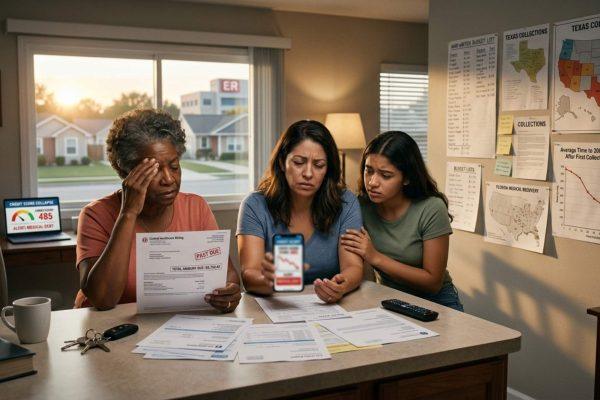
An outstanding medical bill in the United States is more than a late payment—it can unravel a family's financial stability. When a hospital sends an unpaid balance to a collection agency, credit scores can plummet by 50 to 120 points, according to the Consumer Financial Protection Bureau (CFPB). That drop immediately blocks access to home loans, credit cards, and even affordable insurance premiums. For the Latino community, the impact is especially severe.
Why Latinos Are Hit Harder
Many Latinos in the U.S. lack sufficient health insurance or face language barriers that make negotiating billing errors nearly impossible. A 2023 study by the National Foundation for Credit Counseling found that Latino households are more likely to have medical debt sent to collections than white households, even when income levels are similar. This isn't just a numbers game—it's a cycle that traps families in higher interest rates and fewer economic opportunities.
Once a debt is reported to Experian, Equifax, or TransUnion, it can stay on your credit history for up to seven years. Since July 2022, paid-off debts and balances under $500 no longer appear on reports, but large unpaid bills remain a major barrier. The result: a health emergency in Houston or Los Angeles can become a long-term financial sentence for a family in San Juan or Chicago.
Check Your Bills for Errors
Not all hospital bills are accurate. Patients typically have at least 180 days before a debt is reported to credit bureaus. Use that window to request an itemized breakdown of every charge. Duplicate costs, services you never received, or simple administrative mistakes can lead to an unjustified negative report. The Federal Trade Commission (FTC) recommends disputing any incorrect charge immediately with both the provider and the collection agency. You have the right to clear information about the origin and amount of the debt before your financial history suffers permanent damage.
For Spanish-speaking patients, this step is critical. Many hospitals in cities like Miami, New York, and Phoenix have bilingual billing departments, but not all do. If you're unsure, ask for a translator or contact a nonprofit like the National Consumer Law Center, which offers free advice in Spanish.
Financial Assistance Programs Exist
If you can't pay a large bill, act early. Many nonprofit hospitals are required by federal law to offer financial assistance or charity programs for low-income patients. They may also negotiate payment plans based on your real economic capacity. As long as the debt stays under the hospital's management, you have a better chance of getting discounts or balance reductions. Once it's transferred to a collection agency, your options shrink.
This is where resources like the CFPB's educational materials come in. They help you understand the statutes of limitations for debts in each state, so you don't accidentally sign an agreement that reactivates old commitments that could no longer be legally claimed. Avoid using high-interest credit cards to settle medical bills—that only deepens the hole.
Know Your Rights Against Collectors
If a collection agency already has your account, the Fair Debt Collection Practices Act (FDCPA) protects you. Collectors cannot harass you, threaten you, or call at inappropriate times. Never validate a debt over the phone without first demanding written confirmation of the original creditor and the exact amount. Don't share sensitive banking information until you have a formal, documented agreement. Ignoring legal demands can lead to lawsuits and, depending on state law, wage garnishments that threaten your daily survival.
For the Latino community, specialized helplines and nonprofits provide Spanish-language resources to navigate this system. The CFPB also has materials that explain your rights clearly. Using these tools is the first step to breaking the debt cycle and ensuring that a health emergency doesn't become a lifelong financial nightmare.