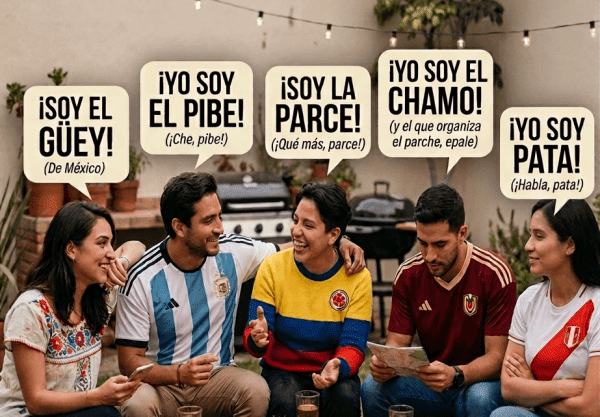
If you've ever traveled across Latin America or chatted with friends from different countries, you've probably noticed that the word for 'friend' changes faster than the landscape. What works in Mexico City might get you a blank stare in Buenos Aires. That's because each country—and sometimes each city—has its own slang for addressing a buddy, a homie, or a close companion.
For bicultural Latinos living in the United States, understanding these terms is more than just a linguistic trick. It's a way to honor the roots of your family and connect with the broader community. As the Latino population in the U.S. continues to grow, these words travel with us, blending into Spanglish and reshaping how we talk to each other.
Mexico and Central America: The Heart of 'Güey' and 'Mae'
Let's start in México, where güey (often spelled 'wey') is the king of casual address. You'll hear it everywhere—from the streets of la Ciudad de México to the beaches of Cancún. But it's not the only option. Carnal implies a brother-like bond, while compa (short for compadre) is common among friends and even strangers in a friendly context.
Head south to Guatemala, and you'll hear cerote or traído—terms that might sound harsh to outsiders but are used affectionately among close friends. In El Salvador, bicho (literally 'bug') and chero are the go-to words for your crew. Honduras leans on alero, a term that evokes loyalty and trust. Costa Rica, meanwhile, is famous for mae, a word so ubiquitous that it's practically a national tic.
The Caribbean: Rhythm and Camaradería
Island nations bring their own flavor. In Puerto Rico, you'll hear broki (a playful twist on 'bro') and pana, which can mean friend or even 'dude.' The latter is also common in Venezuela and parts of Colombia. Dominicans love loco (literally 'crazy') and manín, while Cuba's iconic asere (from the Lucumí language) is a staple of everyday conversation. For a deeper dive into Puerto Rican slang, check out our piece on Bad Bunny's 'Soliá'.
Panamá, at the crossroads of the continent, uses fren (from 'friend') and pasiero, a term that feels both modern and rooted in local street culture.
South America: From 'Che' to 'Pana'
Argentina and Uruguay are known for che, a versatile interjection that can mean 'hey,' 'dude,' or 'friend.' In Colombia, parce (or parcero) is the word of choice in Medellín and Bogotá, while llave is popular in Cali. Peruvians say causa (literally 'cause' or 'reason'), a term that implies a deep bond. Chileans use weón (often spelled 'huevón'), which can be insulting or affectionate depending on tone—so be careful.
These words aren't just vocabulary; they're cultural markers. Using asere in Havana signals you understand the city's Afro-Cuban heritage. Saying mae in San José shows you've spent time with ticos. And dropping a güey in a conversation with Mexican friends is a sign of respect for their linguistic identity.
For Latinos in the U.S., this linguistic map is a living thing. As we navigate between English and Spanish, we borrow these terms and create new hybrids. The result is a dynamic, evolving language that reflects our bicultural reality. Whether you're calling someone pana in Miami or carnal in Los Angeles, you're part of a tradition that stretches from Patagonia to the Bronx.
So next time you're hanging out with friends from different countries, try out a local term. It's a small gesture that can open doors—and maybe even earn you a new compa.