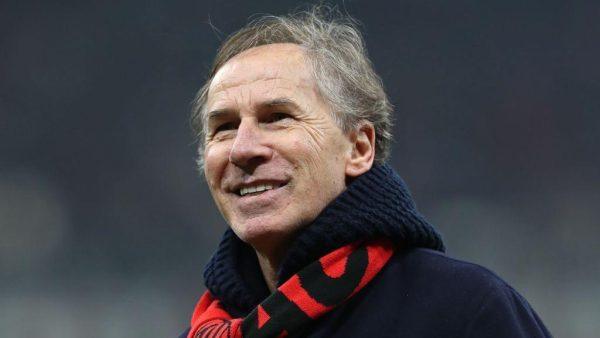
Franco Baresi, the man who defined an era of Italian football and captained AC Milan to global glory, has passed away at the age of 66. The news, confirmed by the club on July 31, 2026, sent waves of grief across the sport, from the terraces of San Siro to the living rooms of fans in Buenos Aires, México City, and every corner of the diaspora where his name was spoken with reverence.
Baresi wasn't just a defender; he was the embodiment of loyalty and tactical intelligence. He spent his entire professional career with the Rossoneri, a feat almost unheard of in today's game. His number 6 shirt was retired by the club, a tribute to his 20 years of service and his 15 seasons as captain.
What happened to Franco Baresi?
As tributes poured in, many fans immediately asked: what was the cause of his death? The official statements from AC Milan and his family have not disclosed a specific cause. However, it is known that Baresi had been battling health issues over the past year. In 2025, the club revealed that he had undergone surgery to remove a pulmonary nodule discovered during a routine check-up, and he was subsequently treated by an oncologist. While several Italian media outlets have linked his death to that illness, no official medical confirmation has been released.
His final public appearance came in February 2026, when he served as a torchbearer at the Milano-Cortina Winter Olympics opening ceremony. Despite his diagnosis, he continued to serve as AC Milan's honorary vice president, a role he held with the same dignity that marked his playing days.
A legacy that transcends football
Baresi's list of achievements is staggering: six Serie A titles, three European Cups, two Intercontinental Cups, and four Italian Super Cups. He was the anchor of the legendary Milan defense that dominated Europe under Arrigo Sacchi and Fabio Capello. Internationally, he won the 1982 World Cup with Italy and captained the Azzurri to the 1994 final, where he delivered one of the most courageous performances in football history—returning just 25 days after knee surgery to play all 120 minutes against Brazil.
His passing has drawn comparisons to the recent losses of other football icons, and it resonates deeply within the Latino community, where football is more than a game—it's a shared language. As we reflect on his life, we also remember the sacrifices of those who support legends, like Celia Cuccittini's role in Messi's rise, and the new generation of sons of legends forging their own paths.
AC Milan's statement described Baresi as a figure whose integrity and leadership would remain part of the club's DNA forever. That sentiment echoes across the football world, from the streets of Naples to the bars of East Los Angeles, where his name is spoken with the same respect as the greatest to ever play.
While the exact cause of his death remains a private matter, his impact is undeniable. He was a pioneer of the sweeper role, a defender who read the game like a chess grandmaster. His legacy will continue to inspire young defenders in Latin America and beyond, proving that intelligence and commitment can triumph over raw athleticism.
As we mourn his loss, we also celebrate his life—a life that gave so much to the beautiful game. For those who grew up watching him, he was more than a player; he was a symbol of what football could be. His story is a reminder that true legends never really die; they live on in the memories of the fans and the history of the sport.
In the coming days, more details may emerge about his health struggles, but for now, the football world unites in gratitude for the man who wore the armband with such grace. Rest in peace, Franco Baresi.