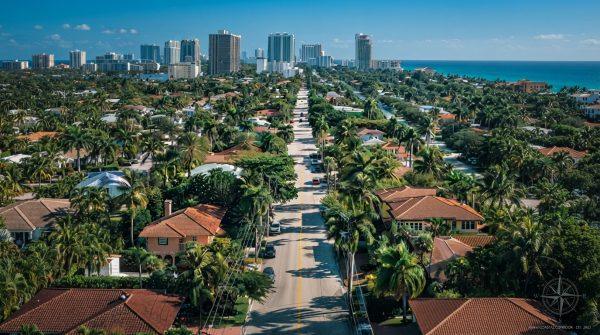
For decades, Florida has been the quintessential retirement destination—sunshine, no state income tax, and a lifestyle that promised ease after years of work. But that dream is quietly cracking under the weight of rising costs. Insurance premiums, property taxes, and everyday expenses have climbed so steeply that many older adults are now packing up and looking elsewhere. The new map of retirement in the U.S. is being redrawn, and it points north and west, away from the peninsula that once seemed irreplaceable.
According to recent demographic analyses, the exodus of seniors from Florida is no longer a trickle but a steady stream. The U.S. Census Bureau has documented the trend, and real estate observers note that the primary drivers are clear: skyrocketing homeowners' insurance, driven by repeated hurricane seasons and climate risk, plus a housing market that has become increasingly unaffordable for fixed incomes. For many Latino families, who often pool resources to support elders, the financial strain is even more pronounced. The link between housing and longevity is well documented, and for low-income Latino seniors, the choice of where to live can have profound health implications.
Why Florida is losing its luster
The numbers tell a stark story. Data from the Joint Center for Housing Studies indicates that annual maintenance costs in the states seniors are flocking to run about 15% lower than in Florida's traditional retirement hubs. For a couple, that translates into roughly $12,000 in savings each year—money that can be redirected toward healthcare, travel, or simply building a more comfortable nest egg. The AARP Public Policy Institute adds that utility costs in some Florida areas exceed national averages by more than 20%, further squeezing budgets.
Insurance is perhaps the biggest culprit. Coastal properties, once prized for their ocean views, are now financial traps. Premiums have doubled or tripled in some communities, and insurers have pulled out of the state entirely, leaving homeowners with few options. This is not just a problem for the wealthy; it hits middle-class retirees and their families hardest. As one relocation specialist put it, “The dream of retiring by the sea has become a nightmare of rising premiums.”
Where seniors are going instead
So where are they heading? Tennessee has emerged as a top alternative, with retirees finding that their fixed expenses drop by an average of 18%. Cities like Chattanooga offer not only lower costs but also a vibrant cultural scene and a slower pace of life that appeals to those seeking tranquility. Georgia is another favorite, particularly its northern counties, where housing payments are about 12% lower than in Florida, according to the U.S. Department of Housing and Urban Development. Even during peak demand periods, some areas see costs contract by 11%, making them attractive for those who plan ahead.
These states offer more than just cheaper real estate. They provide a sense of community and, in many cases, a warmer welcome for Latino retirees who are looking to maintain cultural ties. While Florida has long been a hub for Cuban, Puerto Rican, and other Latino communities, the diaspora is spreading. Tennessee and Georgia are seeing growing Latino populations, and with them, the arrival of bodegas, cultural centers, and Spanish-language services. This makes the transition easier for those who might otherwise feel isolated.
Planning a smarter move
For those considering a move, experts advise doing homework well in advance. Relocation agencies and online portals now track habitability indexes and cost-of-living data with precision, helping retirees compare regions side by side. Government platforms also update databases to reflect exact geographic variations, allowing households to optimize their resources. The key is to avoid the coastal traps and look inland, where the same dollar goes further.
But it's not just about money. The decision to leave Florida often involves emotional ties—decades of memories, friends, and a familiar way of life. Yet, as one retiree from Miami put it, “We didn't want to leave, but we couldn't afford to stay. Now we have peace of mind, and that's worth everything.” That sentiment echoes across the growing number of seniors who are making the leap, trading the beach for a more sustainable future.
The shift is also reshaping Florida's economy. Local authorities are beginning to assess the impact of this population outflow, and housing corporations are adapting their offerings to attract a younger demographic. But for the seniors who are leaving, the focus is on the future—a future that, for many, lies in the rolling hills of Tennessee or the quiet counties of Georgia. As the luxury resort boom in the Florida Keys continues, it's clear that the state is catering to a different kind of resident, one with deeper pockets. For the average retiree, the message is clear: the dream is still alive, but it may no longer be in Florida.
For Latino families, this trend carries particular weight. The retirement of cultural icons like Canelo Álvarez reminds us that transitions are part of life, but they can be managed with dignity and foresight. As more seniors make the move, they are not just seeking financial relief—they are building new communities, preserving their heritage, and proving that the American retirement dream can be redefined, one state at a time.