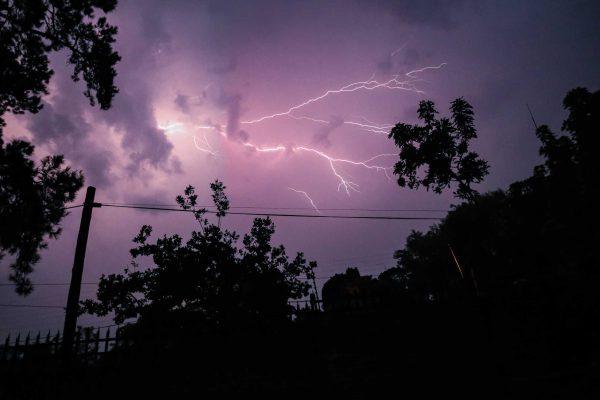
On an ordinary afternoon in Florida, Aaron and Clare Walenga set out for a walk along a trail, unaware that a sudden lightning strike would bring them to the edge of death. The couple, residents of the Sunshine State, were hit directly by an electrical discharge, leaving Aaron with severe facial fractures and burns on his hands, while Clare suffered a cardiorespiratory arrest that left her without a pulse and with a bluish complexion for several critical minutes.
What happened next defied medical expectations. Within just 48 hours, follow-up CT scans and analyses revealed that the brain hemorrhages that had worried specialists had completely disappeared from both patients. Doctors, who had braced for a long and uncertain recovery, were left perplexed by the couple's rapid turnaround.
A community's swift response
The Walengas owe their lives to four strangers who witnessed the strike near an electrified metal fence. Without hesitation, these anonymous heroes risked their own safety to perform continuous cardiopulmonary resuscitation (CPR) until emergency services arrived. Their courageous intervention kept the couple alive during those crucial minutes, a reminder of how ordinary people can become lifelines in extraordinary situations.
This incident unfolds against a backdrop of heightened storm activity in Florida. Meteorological experts have documented a 28% surge in lightning and storm activity this year, with an alarming 212% spike recorded during the first weeks of September. The state, known for its volatile weather, is experiencing one of its most active seasons, and specialists warn that lightning can strike miles away from visible rain, making it imperative to seek shelter at the first sign of thunder.
Climate patterns and safety warnings
Climate scientists are examining the underlying causes of this unusually active season, pointing to available humidity and atmospheric patterns as key drivers of severe storms and lightning strikes. As Florida braces for more extreme weather, health authorities and rescuers emphasize that open-air spaces offer no real protection once clouds begin charging the atmosphere. Their advice is simple: at the first flash or rumble, suspend outdoor activities and head indoors, waiting at least 30 minutes after the last thunderclap before resuming routines.
The Walengas' story is a testament to human resilience and the power of community. It also serves as a stark reminder of the dangers posed by Florida's climate, a topic that resonates deeply with the state's growing Latino population, many of whom have roots in regions where storms are a way of life. For those navigating Florida's storm season, this couple's experience underscores the importance of heeding weather warnings.
As the state continues to grapple with the impacts of climate change, from health alerts to shifts in local regulations, the Walengas' recovery offers a glimmer of hope. Their ordeal, which could have ended in tragedy, instead became a story of survival and gratitude. In an interview, they expressed profound thanks to the strangers who saved them and urged others to take lightning warnings seriously.
For now, the couple is focused on healing and cherishing each day. Their experience, though harrowing, has given them a new perspective on life and the unpredictable forces of nature. As Florida's storm season continues, their story serves as a powerful reminder of the fragility of life and the strength of the human spirit.