Before LATV became a network, before it had a real studio, and before young people lined up outside for live shows, it started with a simple but powerful idea: Los Angeles needed a television space that sounded like the city itself. English, Spanish, Spanglish, music, comedy, culture, ambition—it was all there. We just had to put it on screen. This is my very personal version of that story.
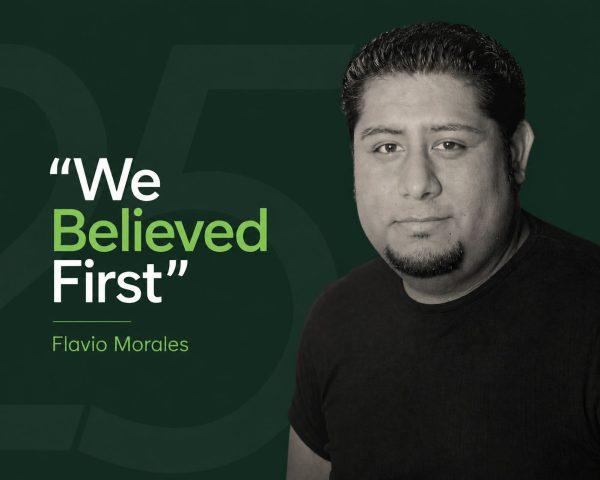
My name is Flavio Morales. In 1990, my brothers Oscar and Efrain and I, along with Richard Estrada, produced a public access show called ILLEGAL interns. Like a lot of creative projects in L.A., we made it with borrowed equipment, long nights, inside jokes, and the belief that our stories belonged on television even if no one had invited us yet. In 1997, the Los Angeles Times featured our show. That article made its way to Walter Ulloa, who reached out and asked to meet.
Walter Ulloa’s Vision for a Bilingual L.A.
Walter was already thinking ahead of the market. Through KJLA, a station licensed to Ventura and working its way into the Los Angeles market, he was building something bilingual, local, and culturally specific. At the time, many media companies still saw Latino audiences in narrow categories: either Spanish-language immigrants or young people who were hard to define. Walter saw something different. He saw what we were living every day: the future audience was bilingual, bicultural, and ready to be recognized.
After we met, we agreed to license our thirty-minute episodes to air on his Ventura station. Walter and general manager Francis Wilkinson were doing the hard work of turning KJLA into a true Los Angeles station, one that could reach viewers across L.A. County. To most people, that may sound like a technical story about broadcast signals. But it was really about access. If you could reach the audience, you could serve the audience. And if you could serve the audience well, you could build something valuable for viewers, creators, advertisers, and the broader community.
That opportunity became more real in the spring of 1998, when Walter brought in Danny Crowe to help run what would become LATV. At the time, I was working in advertising at Wieden+Kennedy in Portland, Oregon. That summer, Walter, Francis, and Danny asked me to move back to Los Angeles and lead programming for the new venture. I was twenty-five years old, and what they were offering was more than a job. It was a chance to help build a media brand from scratch.
My first official day at KJLA/LATV was Cinco de Mayo 1999. I call myself Employee #3, even though people were already working there, because I was the person asked to build the youth-oriented Latino programming vision from the ground up. At the time, the company had three computers, one AOL email account, and studios set up in the garage of an industrial park in Tarzana. It was not glamorous, but it had the one thing every early-stage media company needs: ganas—momentum.
From there, the first priority was straightforward: make great television with limited resources and a clear point of view. I reached out to public access producers because they knew how to make things happen without a big budget. We built music video shows around the sounds our audience cared about: Latino pop, regional Mexican, college alternative, rock en español, and whatever else was coming out of the city. We added community affairs programming and a live call-in sports show. The programming grid felt like Los Angeles itself: energetic, bilingual, opinionated, and always moving.
Walter’s bigger plan required more than cameras and hosts. It required relationships, credibility, and support from people who understood the value of local media. Walter, Francis, and I made the rounds, and I got a real education in how media, government, business, and community all connect. Walter was clear about the mission. He wanted LATV to grow from a local L.A. platform into something larger, eventually a national network, while staying family-owned, audience-focused, and rooted in the community it served.
Within two years, that momentum carried us into Los Angeles through Walter’s purchase of The Complex, a legendary recording studio connected to artists like Earth, Wind & Fire, KISS, Guns N’ Roses, and Elton John. For nine seasons, the cast of The Simpsons recorded there too. The building already had a creative legacy. For LATV, it became a new kind of home base: a place where bilingual television could be produced with the energy of the audience in mind.
By 2001, we were ready for the next phase. We needed a working studio, a stronger programming structure, and a clear identity that sales teams could take into the marketplace. The idea was to create shows that felt different in language, rhythm, and attitude—part Sábado Gigante, part 106 & Park, part MTV’s TRL, but unmistakably Latino Los Angeles. That vision led to LATV Live, a live show airing Monday through Thursday from 8 to 10 p.m. It gave viewers music, interviews, comedy, audience interaction, and a sense that the culture they lived every day finally had a home on television.
The original on-air talent reflected young L.A.: improv actors, a singer from a local rock band, a journalism student, a working model, and a radio DJ. They were not polished in the traditional television sense, and that was part of the appeal. They sounded like the audience. They looked like the audience. They could move from English to Spanish to Spanglish without stopping to explain it. Soon, they became local favorites, and the audience grew from a few dozen people in the room to lines of fans waiting ninety minutes to get inside. Some came to see guests like George Lopez, La Ley, Alejandra Guzmán, and Diego Luna. Others discovered artists like Calle 13, Pitbull, and Juanes before they became household names.
For anyone who did not grow up with LATV, the easiest way to understand its impact is to look at the landscape today. Bilingual programming is everywhere, but in 1999 it was a radical idea. LATV proved that a network could be both proudly Latino and fully modern, and that the audience was waiting for it. As we mark 25 years of Latino storytelling, I think back to that garage in Tarzana and the belief that we were building something that mattered. That belief carried us then, and it still carries us now.